

An antique buyer, in the auction context, is a trained appraiser or auction house representative who evaluates, authenticates, and markets pre-loved luxury items and collectibles on your behalf. Sellers: get a written condition report and pull sold comps from completed listings before you consign anything. Buyers: set a firm maximum bid and request a detailed condition report before the sale closes.
Three things to do right now:
- Request a written condition report from any auction house you’re considering
- Filter your research by sold (not asking) prices from the last 90 days
- Register with a reputable online auction platform and review its fee schedule
Table of Contents
- What does a professional antique buyer actually do?
- How do you choose the right auction house or antique buyer?
- How to prepare your item for auction
- Practical tips for buyers at online auctions
- What does a typical online auction cost and how long does it take?
- Why Insta-auction works for serious collectors and sellers
- Key Takeaways
- The case for trusting specialists and verifying everything yourself
- Insta-auction: where expert appraisal meets collector demand
- Useful sources
- FAQ
What does a professional antique buyer actually do?
A professional antique buyer wears several hats at once: appraiser, authenticator, cataloguer, and market strategist. They examine maker’s marks, provenance paperwork, and physical condition, then assign an estimated value range based on recent sold comparable transactions. That valuation drives the reserve price and the marketing copy.
Cataloguing is where the real work shows. A strong catalog entry includes high-resolution photos from multiple angles, a precise condition description, searchable category terms, and any provenance documentation the seller provides. Auction platforms often feature well-catalogued items on their homepages, which directly increases visibility and, ultimately, the final hammer price.
One critical distinction: auction houses and independent dealers handle buyer’s premiums differently. At most auction houses, the buyer pays a premium on top of the hammer price, while the seller pays a separate consignment commission. Independent dealers typically buy outright and resell, absorbing all margin risk themselves. Know which model you’re dealing with before you sign anything.
Items sold “as is” at auction, meaning the auction house facilitates the sale but does not warrant condition. When a specialist suspects a piece needs deeper authentication, they’ll bring in a category expert or consult a specialist network rather than guess.
Pro Tip: Ask any auction house whether they use in-house appraisers or third-party specialists for your category. The answer tells you a lot about how seriously they’ll market your piece.
How do you choose the right auction house or antique buyer?
Start with a short checklist before you commit to any platform or buyer.
Selection criteria:
- Provenance verification: Does the house have a documented process for checking ownership history and authenticity?
- Condition-reporting standards: Do they provide written, photo-supported condition reports as standard, or only on request?
- Fee transparency: Are consignor commissions, buyer’s premiums, listing fees, and payment-processing charges spelled out in writing before you sign?
- Marketing reach: Which collector audiences and digital channels does the platform actively target?
- Payment terms: How long after the sale closes do sellers receive payment, and is there an escrow process?
Questions to ask directly:
- “What is your buyer’s premium, and how is it disclosed to bidders?”
- “How do you authenticate items, and who performs the appraisal?”
- “Can I see realized-price records for comparable items you’ve sold?”
- “What happens if an item doesn’t meet its reserve?”
Red flags to avoid:
- Guaranteed sale prices before appraisal
- Vague or unsigned consignment agreements
- No publicly available realized-price records
- Pressure to consign quickly without a written condition report
To verify a seller’s legitimacy before committing, the steps for confirming provenance used in art authentication apply equally well to antiques and collectibles.
How to prepare your item for auction
Documentation is the foundation. Gather every receipt, prior auction record, appraisal, maker’s mark photograph, and provenance letter you can find. Even a handwritten note from a prior owner can support a provenance claim and lift the final price.
Before you clean or restore anything, stop. Improper restoration can significantly reduce an antique’s value. Let the auction house appraiser assess the piece first and advise on whether any conservation work is appropriate.
Photography matters more than most sellers expect. Shoot in natural light, capture all four sides plus the base or underside, and photograph every flaw, repair, or wear mark. Honest disclosure of condition in the catalog listing reduces buyer disputes after the sale and builds your reputation as a consignor.
When requesting a condition report, ask for it in writing and with photos. In-person previews are ideal, but high-resolution condition images reviewed by a specialist are the next best option. Auction platforms that index and promote featured items reward well-documented listings with better placement.

One pricing note worth repeating: the gap between an item’s listed asking price and its actual sold transaction price can be substantial in slower categories. Always base your reserve on completed sales, not what similar items are currently listed for. Knowledgeable sellers who source and price correctly can see returns of 5x to 20x their acquisition cost, which is exactly why solid documentation and accurate pricing matter so much.
For furniture specifically, shipping logistics and condition concerns add another layer of prep. The guide to selling furniture at auction covers those category-specific details.
Practical tips for buyers at online auctions
Buying at auction rewards preparation. The single biggest mistake buyers make is bidding on an item they haven’t properly inspected.
Before you bid:
- Use the preview window, whether in-person or virtual, to examine the piece
- Request the full condition report and ask for additional photos of any areas of concern
- Ask directly whether any repairs, repaints, or restorations have been made
- Confirm provenance documentation is available
Bidding strategy:
- Set a strict maximum before the auction opens and don’t revise it upward in the heat of bidding
- Use absentee or proxy bids for items you can’t monitor in real time
- Understand soft-close mechanics: when a bid arrives in the final minutes, the clock resets, so last-second sniping rarely works the way it does on fixed-time platforms
- Factor the buyer’s premium into your maximum before you set it, not after
Shipping and pickup:
- Get freight quotes before bidding on large or fragile items
- Ask whether the auction house offers white-glove packing and shipping or only local pickup
- Budget for insurance on high-value pieces; standard carrier liability rarely covers full replacement value
Estate sales are another sourcing channel worth knowing. Prices can drop 25–50% on the final day of clearance, and building relationships with estate companies can get you early access to inventory before it reaches a public auction.
For a deeper look at online auction bidding, including registration steps and payment procedures, Insta-auction’s buyer guide covers the full process.
What does a typical online auction cost and how long does it take?
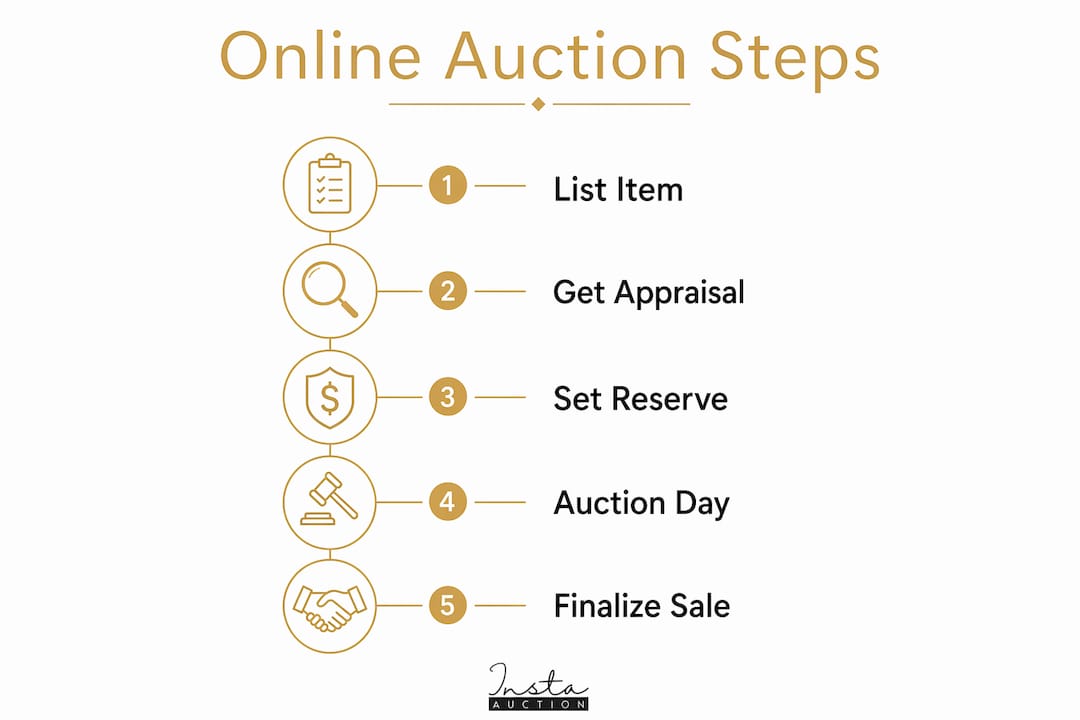
Typical timeline from consignment to payment:
- Intake and appraisal: 1–2 weeks
- Cataloguing and photography: 1–2 weeks
- Online sale period: 1–3 weeks
- Payment to seller: 2–4 weeks after sale closes
Total: roughly 6–11 weeks from drop-off to payment, though specialist categories or high-value items can run longer.
Fee components to calculate your net proceeds:
| Fee Type | Typical Range | Who Pays |
|---|---|---|
| Consignor commission | 10–35% of hammer price | Seller |
| Buyer’s premium | 15–25% of hammer price | Buyer |
| Platform listing fee | Varies by platform | Seller |
| Payment processing | 2–3% | Seller or shared |
| Shipping / packing | Varies by item size | Buyer or negotiated |
For context on marketplace fees: eBay’s final value fee runs approximately 13.25% plus $0.30 per transaction, while platforms like Chairish charge around 20% commission and 1stDibs ranges from 15–20%.
Net proceeds formula: Hammer price minus consignor commission minus listing and processing fees equals your payout. Always read the terms and conditions for the exact fee schedule before consigning.
Why Insta-auction works for serious collectors and sellers
Insta-auction connects sellers of pre-loved luxury items and collectibles with collector audiences through a process built around expert appraisal and hidden-value identification. The platform’s trained specialists handle appraisal, cataloguing, and targeted digital marketing, so sellers aren’t left guessing whether their piece is reaching the right buyers.
Key features for sellers and buyers:
- Expert appraisals conducted by trained specialists who know maker’s marks, provenance signals, and current collector demand
- Detailed condition reports provided as standard, not as an add-on
- Marketing to collector audiences across digital channels, not just a generic listing page
- White-glove shipping options for fragile or high-value pieces
- Charitable giving commitment: a portion of every sale goes to selected charities, making each transaction part of something larger
To start a consignment, submit your item details and photos through the consignor form. Insta-auction’s team will review your submission, confirm what documentation they need, and provide an estimated timeline. Buyers can browse current listings and register to bid directly on the platform.
Key Takeaways
Sold comps, written condition reports, and transparent fee math are the three tools that separate informed auction participants from expensive guesswork.
| Point | Details |
|---|---|
| Use sold prices, not asking prices | The gap between listed and sold prices can reach 50–80% in slow categories; filter by completed transactions. |
| Get condition reports in writing | Auction items sell “as is”; a written, photo-supported report is your only protection as a buyer. |
| Calculate fees before you set a reserve | Factor in consignor commission, buyer’s premium, and processing fees to know your real net proceeds. |
| Avoid restoration before appraisal | Improper cleaning or restoration can reduce value by 40–80%; let the specialist advise first. |
| Insta-auction for expert-driven sales | Insta-auction provides trained appraisals, condition reports, and collector-targeted marketing for US online auctions. |
The case for trusting specialists and verifying everything yourself
The conventional wisdom says: find a reputable auction house and let them handle it. That’s not wrong, but it’s incomplete. The best outcomes come from sellers and buyers who treat specialist expertise as a starting point, not a final answer.
Condition reports from a trained appraiser are genuinely valuable. So are realized-price records from comparable sales. But neither replaces your own research into what similar pieces actually sold for in the last 90 days. An appraiser’s estimate reflects their expertise and their platform’s buyer pool; the market’s actual verdict shows up in completed transactions.
The same logic applies on the buying side. A catalog photo, even a good one, can miss a hairline crack or a repainted section. Request the condition report. Ask the extra question. The auction house won’t penalize you for due diligence, and the ones that do are telling you something important about how they operate.
Conservative bidding and documented consignment aren’t just cautious habits. They’re how experienced collectors protect their margins over time.
Insta-auction: where expert appraisal meets collector demand
Sellers who want competitive prices without the guesswork of DIY listing get something specific from Insta-auction: trained specialists who identify value that a general marketplace would miss, paired with marketing that reaches actual collectors rather than casual browsers.

Whether you’re consigning a single statement piece or clearing a full estate, Insta-auction’s process starts with an expert appraisal and ends with a sale to a motivated buyer. Browse auction-ready luxury item examples to see what sells and at what price points, then submit your items through the consignor form to get a valuation and timeline. Buyers can register directly at Insta-auction’s luxury goods auctions to access current listings and set up bid alerts for new inventory.
Useful sources
- Buying Antiques at Auction — condition-report guidance and buyer responsibility
- Selling Antiques Online: Pricing and Sold Comps — sold-price research methodology
- How to Sell Antiques Online for Profit — fee structures and sourcing strategies
- LiveAuctioneers: Create an Online Catalog — cataloguing and category best practices
- How Antique Auctions Work — bidding formats and soft-close mechanics
- How Auction Experts Identify Hidden Value in Luxury Goods — Insta-auction appraisal methodology
- Types of Collectibles Under Auction Value — category price expectations
- Real Estate Auction Finds: High-Value Examples — realized-price case studies
FAQ
What is an antique buyer in an auction context?
An antique buyer is a trained appraiser or auction house representative who evaluates, authenticates, and markets pre-loved items on behalf of sellers. They set reserves, write condition reports, and connect pieces with collector audiences.
How do I know what my antique is worth before selling?
Filter completed sales databases by sold transactions from the last 90 days. The gap between asking prices and actual sold prices can reach 50–80% in slower categories, so asking prices alone will mislead you.
What fees should I expect when selling through an online auction?
Sellers typically pay a consignor commission of 10–35% of the hammer price, plus platform and payment-processing fees. Buyers pay an additional buyer’s premium, usually 15–25%, on top of the hammer price.
Should I clean or restore my antique before consigning it?
No. Improper restoration can reduce value by 40–80%. Submit the piece as-is and let the auction house appraiser advise on whether any conservation work is appropriate before the item is catalogued.
How does Insta-auction handle appraisals and condition reports?
Insta-auction uses trained specialists to appraise items, produce detailed condition reports, and market pieces to targeted collector audiences. Sellers start by submitting item details through the consignor form on the platform.