

An art buyer in the online auction context does one thing above all else: acquires pre-owned works at the best verifiable price while controlling risk. Before you click bid on anything, run three checks immediately.
- Verify provenance and condition. Request the condition report and ownership history before the sale opens.
- Calculate your all-in cost. Add the buyer’s premium (typically 15–30% of hammer price), applicable sales tax, shipping, and insurance.
- Set a ceiling that includes every fee. Your max bid is not the hammer price you want to pay — it is the total invoice you can afford.
Table of Contents
- What every art buyer must check before placing a bid
- How online auctions actually work: estimates, reserves, and price dynamics
- How to evaluate a work before you bid
- Bidding tactics and the cost math you must do first
- What happens after the hammer falls
- How to become a more effective art buyer over time
- Why Insta-auction works well for online art and collectibles buyers
- Key Takeaways
- Taste beats trends — and experience beats both
- Insta-auction: where vetted lots meet transparent buying
- FAQ
What every art buyer must check before placing a bid
A fast pre-bid checklist keeps you from winning a lot you later regret.
- Provenance documents: Ask for prior ownership records, exhibition history, invoices, and any certificates of authenticity. Gaps in the chain are a red flag, not a minor detail.
- Condition report: Request it directly from the auction house. For lots above your comfort threshold, commission an independent conservation report — these typically start around $1,000 but can save multiples of that.
- Estimate vs. reserve: The estimate is a marketing range; the reserve is the hidden floor. If bidding stalls below the reserve, the lot is “bought in” and goes unsold.
- Registration and KYC: Register early — most houses require a valid photo ID and sometimes a bank reference or deposit for higher-value lots. Waiting until sale day is a real risk.
- Bidding channel: Confirm whether you’ll bid live online, by phone, or via absentee order, and check any technical minimums or cutoff times for each channel.
Pro Tip: Contact the specialist handling the lot before the sale. They can share condition context that never makes it into the catalog and sometimes flag quieter lots worth watching.
How online auctions actually work: estimates, reserves, and price dynamics
Auctions account for roughly 45% of the global art market, which means learning how they price work is worth your time. The mechanics are less mysterious than they look.
Estimates are set to attract bidders, not to guarantee value. A well-priced estimate draws competitive interest; a high one kills it before the gavel falls. Specialists at major houses openly say they price from the buyer’s perspective — if a work looks too expensive in the catalog, most bidders scroll past and never return.
Reserves sit just below the low estimate in most cases. When a lot sells below reserve, the auctioneer “buys it in” on the seller’s behalf. Repeated buy-ins on the same work can hurt its resale prospects later, so sellers and specialists usually set reserves carefully.
The “three Ds” — death, debt, and divorce — are real market catalysts. These circumstances push motivated sellers to accept lower reserves, which can create genuine buying opportunities for prepared collectors.
Bidding channels each carry trade-offs. Live online bidding is transparent and real-time. Phone bidding puts a specialist between you and the auctioneer, which adds a layer of comfort but slight latency. Absentee or proxy bids are convenient but can push you to your stated maximum without the granular control you’d have bidding live. For online auction bidding mechanics, understanding each channel before you commit matters.
How to evaluate a work before you bid
Provenance is the first filter. Look for a continuous ownership chain backed by documents: invoices, exhibition catalogs, prior auction records. An unverifiable owner or a decade-long gap in the record is not automatically disqualifying, but it should lower your ceiling. For estate-sale lots, estate valuation context can help you read provenance gaps in proportion.
Authenticity questions arise most often with works that lack a catalogue raisonné listing or a certificate from a recognized authenticating body. If neither exists, ask why. Most contemporary artists have no formal authenticating body — that alone is not a red flag. What matters is whether the work should have documentation and doesn’t.
Photos routinely mask condition issues — texture, surface abrasion, and prior restoration are nearly invisible in catalog images. Attend the preview in person when you can. When you can’t, ask the specialist to video-call you through the work.
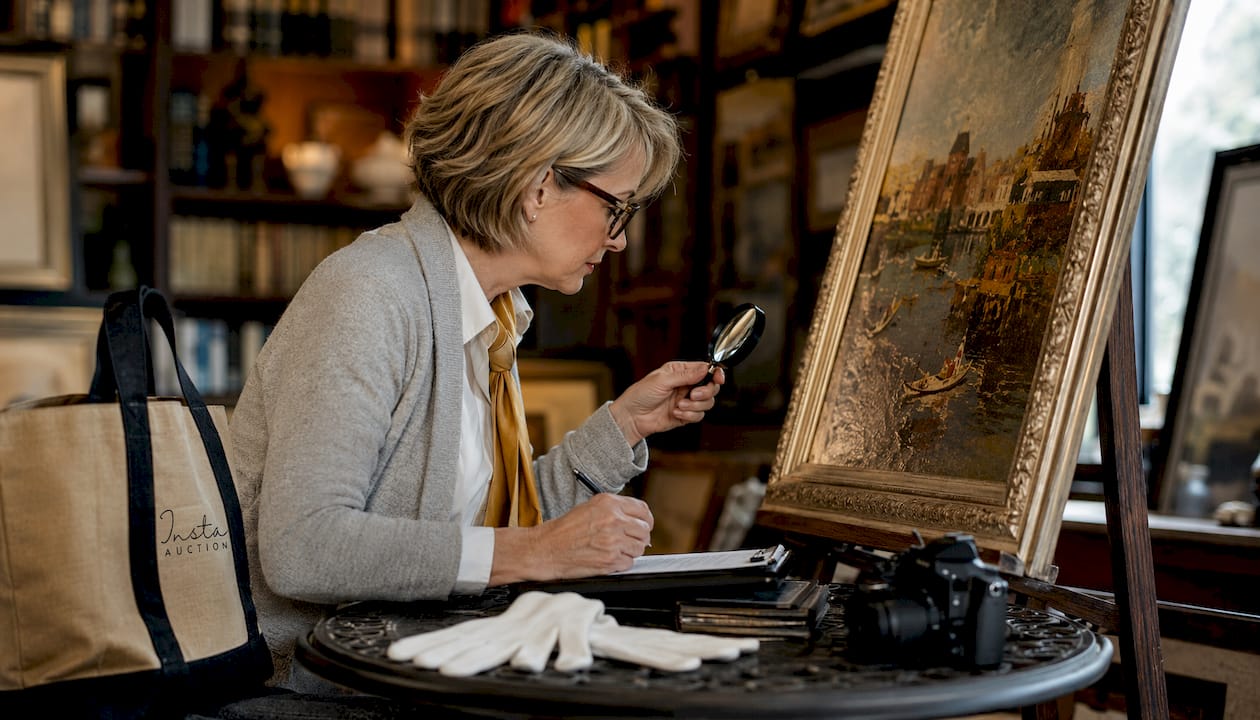
For comparative value, search auction databases for recent hammer prices on comparable works by the same artist. Filter by medium, size, and date — a small work on paper by an artist whose large canvases sell well may trade at a very different multiple. Knowing how experts identify hidden value in similar lots sharpens your read on whether an estimate is generous or tight.
Pro Tip: A condition issue is not always a deal-breaker. If you’re buying for emotional reasons and the damage is stable, price it into your ceiling. If you’re buying as an investment, walk away — condition problems compound at resale.
Bidding tactics and the cost math you must do first
Set your maximum bid after calculating the full invoice, not before. Buyer fees typically run a substantial percentage of the hammer price, and logistics push the real all-in cost higher still. On a high hammer price, the final invoice commonly increases significantly once premium, taxes, and shipping are included.
| Cost line | Example (high hammer price) | Notes |
|---|---|---|
| Hammer price | — | What the auctioneer calls |
| Buyer’s premium (typically 15–30%) | — | Typically 15–30% |
| Sales tax (varies by state) | — | Depends on jurisdiction and exemptions |
| Insured shipping | — | Varies by size, distance, fragility |
| Storage (if delayed pickup) | — | Avoid by arranging pickup promptly |
| Estimated total | — | Before any import duty |
- Live online bidding gives you real-time control and full visibility of competing bids. Best for most online buyers.
- Phone bidding suits high-value lots where you want specialist guidance in the room. Slight lag is the trade-off.
- Absentee/proxy bids are convenient for lower-stakes lots, but the system will use your full maximum if competition demands it.
For newcomers, avoid last-second sniping. Auction technology and lot pace vary by platform; place bids with a buffer and verify channel cutoff times ahead of the sale. Experienced buyers often prefer real-time bidding on significant lots rather than a firm absentee order that offers no granular control once submitted.
Pro Tip: Build a simple spreadsheet row for each lot you’re tracking: hammer estimate midpoint, premium, tax, and shipping. If the all-in number still works, you have a real ceiling. If it doesn’t, you know before the excitement of the room takes over.
What happens after the hammer falls
Payment invoices typically arrive the day after the sale. Most houses give buyers around 15 days to settle, accepting bank transfer or credit card. Confirm acceptable methods before the sale — some houses limit card payments above certain thresholds.
- Shipping: You can use the auction house’s approved shippers or arrange your own. Either way, insist on insured transport. For interstate moves, confirm whether sales tax applies in the destination state. International shipments may trigger import duties.
- Storage: Pickup windows are usually short. Storage fees accumulate quickly on large or fragile works — arrange collection promptly.
- Documentation to keep: The invoice, condition report, certificate of authenticity, and any provenance documents form your ownership file. You’ll need them for insurance, future resale, and tax purposes.
- Resale basics: Art held as a collectible in the U.S. is generally subject to the 28% collectibles capital gains rate for long-term holdings, though your specific situation depends on how the IRS classifies the asset. Consult a tax professional for your own case — this article is general information, not tax advice.
How to become a more effective art buyer over time
Start with a personal acquisition policy: decide your budget split between emotional purchases and speculative ones, your target categories, and the condition thresholds you’ll accept. Writing this down before a sale prevents in-the-moment drift.
Build an education routine around auction previews, museum visits, and price databases. Previews are free, open to the public, and the single best way to calibrate your eye. Specialists are there to talk — use them. Buying your first original work is easier when you’ve already spent time looking at comparable pieces in person.
Keep a purchase file for every lot: invoice, provenance dossier, condition report, and your own notes from the preview. That file is your asset record and your resale story.
On budget discipline, building an art budget around what you genuinely want to live with — rather than what you expect to flip — tends to produce better decisions and fewer regrets. Art is a long-duration asset. Diversify by medium and price band rather than concentrating in one category chasing a trend.
Why Insta-auction works well for online art and collectibles buyers
Insta-auction is built specifically for pre-owned luxury goods, collectibles, and estate lots — the categories where provenance clarity and specialist knowledge matter most.
- Vetted lots with specialist appraisals: Every item goes through expert review before listing, so condition and authenticity information is grounded in real assessment, not seller description alone.
- Clear fee disclosure: Buyer’s premium and applicable charges are disclosed upfront, so your all-in cost calculation starts from accurate numbers.
- Nationwide shipping with flat-rate fees: No guessing at logistics costs. Flat-rate shipping removes one of the biggest variables in post-sale math.
- Streamlined registration: KYC and identity verification are built into the platform workflow, so you’re ready to bid without a last-minute scramble.
- Social responsibility: Insta-auction donates a portion of every sale to selected charities, which means your purchase contributes beyond the transaction.
Pro Tip: Browse the luxury goods auction listings before your first bid to calibrate what specialist-appraised lots look like and how estimates are presented.
Key Takeaways
Confident auction buying comes down to three disciplines: know what you’re buying, know what it will actually cost, and set your ceiling before the bidding opens.
| Point | Details |
|---|---|
| Set an all-in ceiling | Include buyer’s premium, sales tax, shipping, and insurance before you bid. |
| Insist on condition reports | Request the report before every sale; commission an independent one for high-value lots. |
| Verify provenance first | Gaps in ownership history are a red flag — ask for invoices, exhibition records, and certificates. |
| Register early | KYC and deposit requirements take time; waiting until sale day risks missing your lot. |
| Insta-auction for vetted lots | Specialist appraisals, flat-rate shipping, and clear fee disclosure reduce buyer risk on pre-owned luxury and collectibles. |
Taste beats trends — and experience beats both
The conventional advice is “buy what you love.” That’s true as far as it goes, but it skips the harder part: you need enough exposure to know what you actually love versus what you’ve been told is valuable right now. Trend-chasing in the art market tends to produce expensive regret. The collectors who build genuinely satisfying collections spend time at previews, talk to specialists, and make small, considered purchases before committing serious money.
Discipline matters more than instinct at the start. Set your ceiling before the room gets loud. Keep your records from day one. And treat every auction, won or lost, as a data point — you learn more from a lot you passed on than from one you overpaid for in the heat of the moment.
Insta-auction’s specialist-appraised listings and transparent fee structure are a practical starting point for buyers who want that kind of clarity from the first bid.
Insta-auction: where vetted lots meet transparent buying
Most online auction platforms leave buyers to figure out condition, provenance, and total cost on their own. Insta-auction takes a different approach. Trained specialists appraise every lot before it lists, condition information is built into each listing, and flat-rate nationwide shipping means your all-in cost is calculable before you bid — not after. The buyer’s premium is disclosed clearly, so the spreadsheet math from this guide works from real numbers.
If you’re ready to bid on pre-owned luxury goods, collectibles, or estate pieces with that level of transparency behind every lot, browse current luxury auction listings or check the expert bidding tips to sharpen your strategy before the next sale opens.
FAQ
What does a buyer’s premium mean at auction?
The buyer’s premium is a fee added to the hammer price, typically 15–30%, paid directly to the auction house. It is separate from the hammer price and must be factored into your maximum bid before you raise a paddle or click bid.
How do auction estimates work?
Estimates are a marketing tool designed to attract bidders, not a guarantee of final value. A well-set estimate draws competitive interest; a high one often kills it — which is why specialists set estimates from the buyer’s perspective.
When should I commission an independent condition report?
For high-value lots where the catalog condition report is brief or the work has visible restoration history, an independent conservation report is worth the cost. These start around $1,000 and can reveal issues that photos and standard reports miss.
How early should I register to bid?
Register several days before the sale. Most auction houses require photo ID and sometimes a bank reference or deposit for higher-value access — leaving registration to sale day risks being locked out of the lot you want.
Does Insta-auction disclose all fees before I bid?
Yes. Insta-auction discloses the buyer’s premium and applicable charges upfront on every listing, and flat-rate nationwide shipping means you can calculate your full invoice before placing a bid.