

Selling an entire collection quickly and profitably comes down to one decision: matching the right buyer type to the right selling channel. A collection buyer can be a specialist dealer, a private collector, an auction house, or an online platform, and each one offers a different tradeoff between speed and final price. Dealers close fast but typically pay a lower percentage of retail value. Auction houses take longer but generate the highest returns on rare pieces. Online platforms like Insta-auction sit in the middle, offering competitive prices with broader reach and less friction than a traditional consignment arrangement.
Before you contact anyone, here is what the most profitable sellers do first:
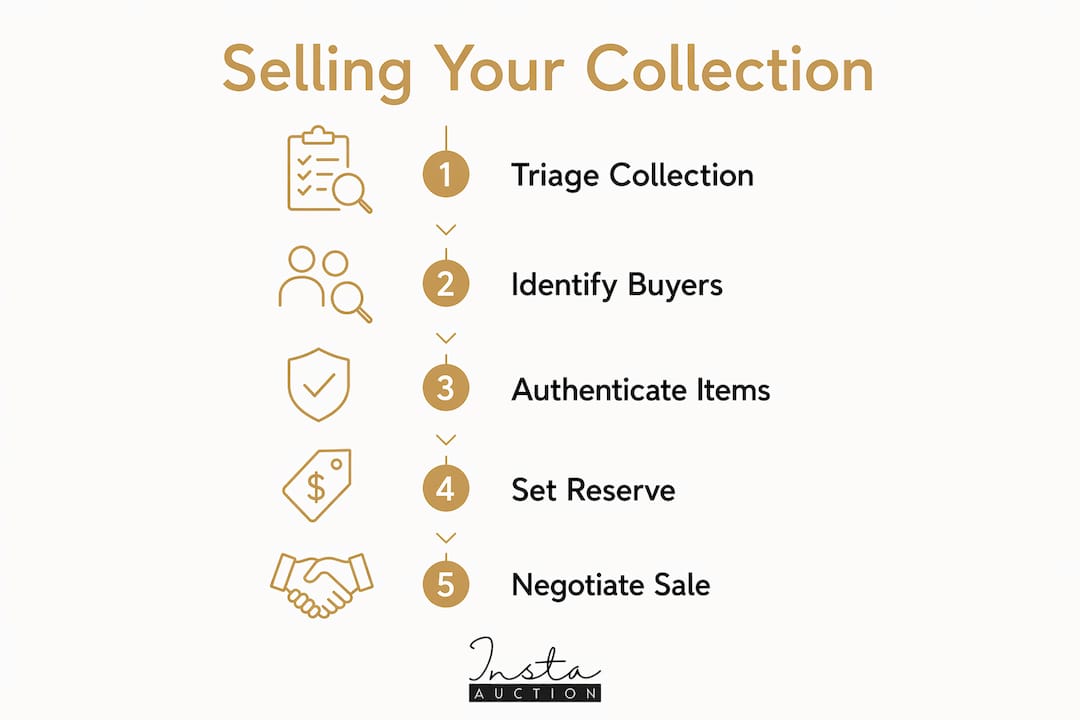
- Triage the collection into high-value, mid-value, and low-value tiers, then route each tier to the appropriate channel
- Catalog and photograph every item with accurate condition notes and any provenance documentation you have
- Get third-party grading on key pieces through services like PSA, NGC, or CGC before listing or consigning
- Research comparable sales on completed auction records and online marketplaces to set realistic price floors
- Choose the channel that fits your timeline, not just your price target, because a stalled sale costs money too
The sellers who leave money on the table almost always skip the triage step. They either dump everything through one channel or spend months trying to sell low-value bulk items individually. Neither works.
Table of Contents
- How to find reliable buyers for your collectible collection
- Strategies that actually maximize what you net from a sale
- How to prepare your collection before approaching any buyer
- Pitfalls that cost sellers real money
- Why provenance can double what a buyer pays
- Insta-auction gives your collection a competitive edge at sale time
- FAQ
- Key Takeaways
How to find reliable buyers for your collectible collection
The first filter for any serious collection buyer is a verifiable track record. That means completed sales you can look up, not just testimonials on a website. Specialist dealers affiliated with recognized trade organizations, auction houses with published results, and online platforms with transparent feedback systems all meet that bar. A buyer who cannot point you to past transactions is a buyer worth skipping.
Here is where to look and what to verify:
- Specialist dealers and auction platforms: Search for dealers with category expertise in your specific collectible type. A coin dealer who also handles sports cards is less valuable than one who focuses exclusively on numismatics. Published auction results from houses like Heritage Auctions or Swann Galleries give you a price benchmark and confirm the buyer pool is real.
- Collector networks and conventions: Collector clubs, trade shows, and hobby conventions connect you directly with private buyers who often pay premiums because they want specific pieces for their own collections, not for resale. The American Philatelic Society, the American Numismatic Association, and category-specific Facebook groups are all legitimate starting points.
- Online marketplaces with buyer protection: Platforms that offer buyer verification and dispute resolution reduce the risk of non-payment or fraud. Look for escrow options on high-value transactions.
- Authentication and credibility checks: Before sharing detailed inventory with any buyer, confirm their business registration, check for complaints with the Better Business Bureau, and ask for references from other sellers. Legitimate buyers expect this and will not object.
- Professional communication standards: Buyers who respond promptly, ask specific questions about condition and provenance, and provide written offers are operating professionally. Vague verbal offers with pressure to decide quickly are a warning sign.
E-commerce represented a large portion of collectible sales recently, and social media platforms now influence the research phase for many buyers. That means your collection’s visibility online directly affects who finds it and what they are willing to pay.
Pro Tip: Get a third-party appraisal before approaching any buyer. An independent valuation from a certified appraiser gives you a credible price anchor, signals professionalism, and prevents buyers from lowballing you on items you have not researched.
Strategies that actually maximize what you net from a sale
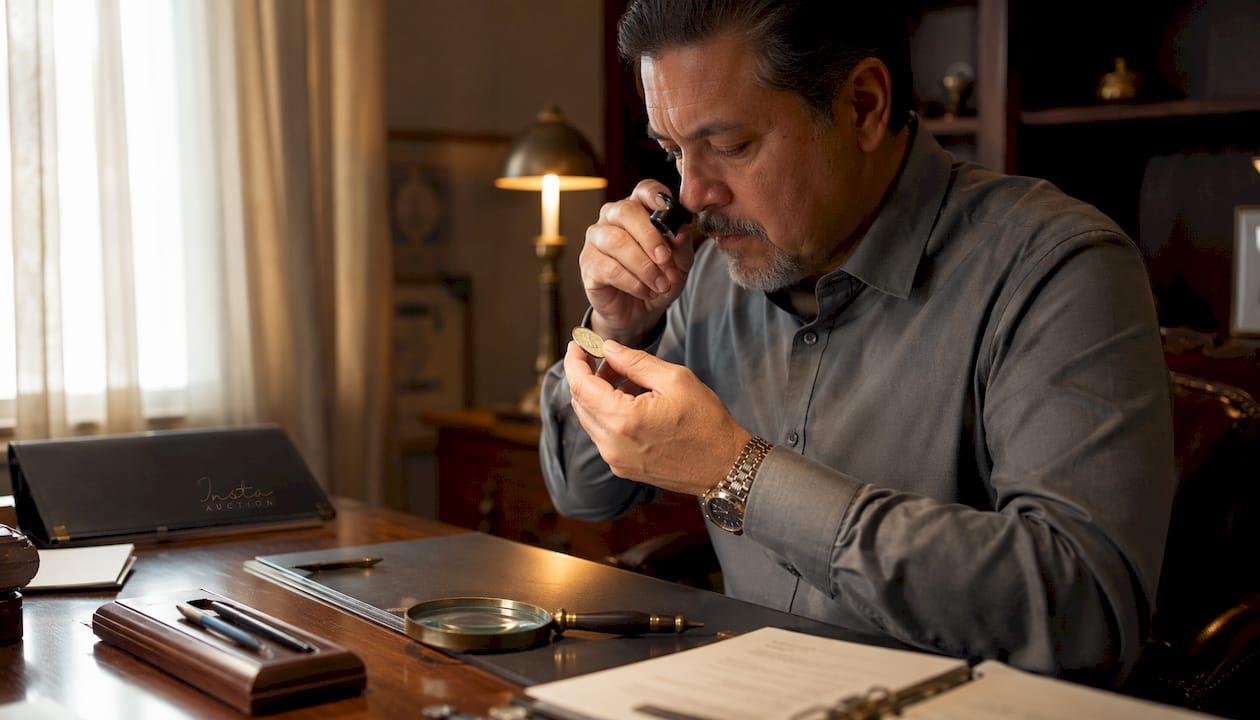
The most common mistake sellers make is treating a collection as one transaction. It rarely is. A collection with 200 items probably has 20 that drive 80% of the total value, and those 20 deserve a completely different sales strategy than the remaining 180.
The approach that consistently produces the best net returns is triaging by value and channel:
- High-value items go to auction or specialist consignment. Major auction houses charge sellers commissions and buyer premiums, but the competitive bidding environment regularly produces prices that exceed dealer offers. For truly rare or one-of-a-kind pieces, that premium is worth the wait.
- Mid-value pieces work well through dealers or online platforms. Direct dealer sales offer speed and simplicity. Online platforms reach a wider buyer pool without requiring you to manage individual listings. The tradeoff is a moderate fee structure versus the immediacy of a dealer buyout.
- Low-value bulk items are often better donated than sold. The time required to list, photograph, pack, and ship hundreds of low-value items frequently exceeds the revenue they generate. A donation to a qualified 501©(3) organization produces a tax deduction at fair market value, which for many sellers is the better financial outcome.
Timing matters more than most sellers expect. Auctions generate the highest returns but require longer timelines, while dealer buyouts provide speed at the cost of price. If you need cash quickly, dealer or direct platform sales are more realistic, while longer timelines favor consignment or auction.
One cost that catches sellers off guard: in the U.S., gains from collectibles are taxed at a federal rate that can be higher than long-term capital gains on stocks. That is materially higher than the long-term capital gains rate on stocks, and it should factor into your pricing and timing decisions before you accept any offer.

Pro Tip: When negotiating consignment terms, ask specifically about the minimum reserve price, the commission rate, and whether unsold items are returned to you or re-listed at a lower price. These three terms determine your actual net proceeds far more than the headline commission percentage.
How to prepare your collection before approaching any buyer
Preparation is where most of the money is made or lost. A well-documented, properly graded collection commands higher prices, closes faster, and attracts more serious buyers. A collection presented as a disorganized pile of items with no paperwork does the opposite.
Work through these steps before you contact a single buyer:
- Condition assessment and third-party grading: For coins, cards, and comics, grading services like PSA, NGC, and CGC are the standard. A PSA 10 graded card can command a 300–500% premium over a PSA 8. Graded coins routinely sell for 2–3 times more than ungraded equivalents. The grading fee pays for itself on any item worth more than a few hundred dollars.
- Provenance and documentation: Compile purchase receipts, certificates of authenticity, prior auction records, and any documentation connecting the item to a notable previous owner. This paperwork is not just administrative, it is a direct value driver.
- Categorization by value and rarity: Group items by category, condition grade, and estimated value range. This makes it easier to route each tier to the right channel and gives buyers a clear picture of what they are evaluating.
- Photography and accurate descriptions: High-resolution photographs from multiple angles, with close-ups of any flaws or distinguishing marks, reduce buyer uncertainty and speed up the decision process. Inaccurate descriptions that lead to disputes after a sale damage your reputation with buyers you may want to work with again.
- Comparable sales research: Check completed auction records and sold listings on major platforms to establish realistic price expectations. Sellers who anchor on retail catalog prices rather than actual transaction prices consistently overprice and stall their own sales.
Authentication status functions as a gatekeeper for serious buyers. Certified items trade faster and at higher prices because they unlock institutional and advanced collector buyer pools that simply will not engage with unverified material. For sports memorabilia specifically, understanding how to authenticate rare items before listing can be the difference between a quick sale and months of stalled negotiations.
Pitfalls that cost sellers real money
Most of the costly mistakes in collection selling are predictable, and nearly all of them stem from rushing the process or skipping preparation steps.
- Skipping appraisal and market research: Sellers who do not research comparable sales routinely undervalue their best items by 30–50%. The 90/10 rule holds across most collections: roughly 90% of the value is concentrated in 10% of the items. Identifying that 10% before you sell is the single highest-return activity in the entire process.
- Choosing the wrong channel out of urgency: Accepting a dealer buyout for items that would perform well at auction is a common and expensive mistake. Speed has a real cost. Know what that cost is before you accept it.
- Neglecting condition grading and documentation: Buyers at every price level use condition and provenance to justify their offers. Without that documentation, they will price in the uncertainty, and that uncertainty always comes out of your proceeds.
- Ignoring tax implications: The 28% federal collectibles capital gains rate is not a detail to sort out after the sale. It affects which items make sense to sell now versus hold, and whether a charitable donation produces a better net outcome than a cash sale.
- Failing to vet buyers: Scams targeting collection sellers are real, particularly for high-value items sold privately. Requests for wire transfers, overpayment schemes, and buyers who refuse escrow on large transactions are all red flags. Use estate sale and auction platforms with built-in buyer verification when the transaction value justifies it.
- Overpricing based on catalog values: Retail catalog prices and actual transaction prices are often very different numbers. A collection priced at catalog value will sit unsold. A collection priced at realistic market value moves.
Why provenance can double what a buyer pays
Provenance is the documented ownership history of an item, and it is consistently underestimated by casual sellers. For serious buyers, it is often the deciding factor between a competitive offer and a premium one.
Professional provenance documentation can add premiums of 20% to over 100% on collectible values, with the largest premiums attached to items with distinguished previous ownership. A coin that passed through a famous collection, a painting with an unbroken chain of ownership back to the artist’s studio, or a piece of memorabilia with authenticated celebrity provenance all command prices that the same item without documentation simply cannot reach.
Statistic callout: Professional provenance documentation adds premiums of 20% to over 100% on collectible values, with the highest multiples tied to prestigious prior ownership chains.
The mechanism is straightforward. Buyers pay for certainty. A well-documented provenance reduces the risk of authenticity disputes, supports insurance valuations, and makes the item easier to resell later at a higher price. Every link in the ownership chain that you can document adds to that certainty.
Uniqueness compounds the provenance effect. Items with irreplaceable scarcity tied to genuine historical or cultural significance hold value far better than artificially limited editions or trend-driven collectibles. A one-of-a-kind piece with a strong ownership history is the most defensible asset in any collection. Inclusion in authoritative catalogs, certification programs like PCGS Set Registry for coins, or major exhibition records adds another layer of market confidence that translates directly into buyer willingness to pay.
For sellers, the practical implication is simple: spend time on your paperwork before you spend time on your listings. A collection with thorough provenance documentation will attract better buyers, generate stronger offers, and close faster than the same collection presented without it.
Insta-auction gives your collection a competitive edge at sale time
Selling through traditional channels means navigating dealer lowballs, lengthy auction house timelines, and platform fees that eat into your proceeds. Insta-auction offers a different path: a professionally managed online auction environment built specifically for pre-loved luxury items and collectibles, where trained appraisers handle the valuation and marketing so you do not have to.
The concrete difference is in how items are presented to buyers. Insta-auction’s experts appraise each piece and market it across multiple digital channels, which means your collection reaches the buyers most likely to bid competitively, not just whoever happens to browse a general marketplace. Sellers consistently report stronger final prices than they expected from a direct dealer sale, without the months-long wait of a traditional auction house consignment.
Getting started is straightforward. Browse auction-ready luxury item examples to see how collections are presented, then submit your collection for consignment to get an expert appraisal and a clear picture of what your pieces could realistically achieve. Insta-auction also donates a portion of every sale to charity, so your transaction supports something beyond the transaction itself.
FAQ
What is the best way to sell a collection?
The most effective approach is to triage your collection by value, then route high-value items to auction or specialist consignment, mid-value pieces to dealers or online platforms, and low-value bulk items to charitable donation. This combination maximizes total net proceeds while minimizing wasted effort on items that cost more to sell than they return.
What are the three types of collection buyers?
The three primary buyer types are dealers (who buy outright for resale, offering speed but lower prices), private collectors (who often pay premiums for specific pieces they want for their own collections), and auction houses or platforms (which generate competitive bidding and typically the highest prices for rare or desirable items).
What is the best site to sell collectibles?
There is no single best platform for every collection. Rare and high-value items perform best through specialist auction houses or platforms like Insta-auction, which provide expert appraisal and targeted marketing. Mid-range items sell well on large general marketplaces. The right choice depends on the item’s value, category, and how quickly you need to close the sale.
What makes a collection valuable?
Condition, provenance, rarity, and authentication status are the four primary value drivers. Provenance documentation alone can add premiums of 20% to over 100% on collectible values, while third-party grading from services like PSA or NGC can command 300–500% premiums for top-graded cards and 2–3 times price multiples for graded coins over ungraded equivalents. Items with irreplaceable scarcity tied to genuine historical significance hold value most reliably over time.
Key Takeaways
Selling a collection profitably requires triaging items by value, matching each tier to the right buyer type, and documenting condition and provenance before any sale begins.
| Point | Details |
|---|---|
| Triage before selling | Route high-value items to auction, mid-value to dealers or online platforms, and low-value bulk to charitable donation. |
| Grading drives price | A PSA 10 graded card commands a 300–500% premium over a PSA 8; graded coins sell for 2–3 times more than ungraded equivalents. |
| Provenance adds real premiums | Documented ownership history adds 20% to over 100% to collectible values, especially with distinguished prior owners. |
| Tax implications matter | U.S. collectibles gains are taxed at a federal rate that can be higher than long-term capital gains on stocks. |
| Insta-auction for consignment | Insta-auction provides expert appraisal, multi-channel marketing, and competitive bidding for pre-loved luxury items and collectibles. |