

A consignment auction is a sales event where a seller entrusts items to an auction house, which markets and sells those items on the seller’s behalf in exchange for a commission. This model gives individuals and families access to a wider pool of buyers than any garage sale or private listing ever could. Whether you own a vintage Rolex, a signed painting, or a designer handbag collection, the consignment auction process puts competitive bidding to work for you. Platforms like Insta-auction, AMA Auctions, and DIYAuctions have made this process faster and more transparent than the traditional auction house model of decades past.
How does a consignment auction work for sellers and buyers?
The consignment auction process follows a clear sequence. Understanding each step prevents costly mistakes and missed deadlines.
- Submit your items. The seller, called a consignor, delivers items to the auction house or platform. The house appraises each piece and assigns a lot number.
- Advertising period begins. Auction houses typically advertise lots 2–3 weeks before the event. This window drives buyer awareness and early interest.
- Delivery deadline. Items must physically arrive or be photographed and listed at least 1 week prior to auction day. Missing this deadline means waiting for the next event.
- Auction day. Bidders compete in real time, online or in person. The highest bid wins.
- Payout. Consignors on modern platforms earn 60%–75% of the final sale price, with payment typically issued within one week after the auction closes.
That 60%–75% return is meaningfully higher than what most resale shops offer. It reflects the competitive bidding environment that auctions create.
Commission structures: traditional vs. modern platforms
| Auction type | Typical seller commission | Payout timeline |
|---|---|---|
| Traditional auction house | 20%–50% of sale price | 30–60 days |
| Niche online platform | ~10% of sale price | Under 1 week |
| Seasonal consignment sale | 25%–40% of sale price | 1–2 weeks |
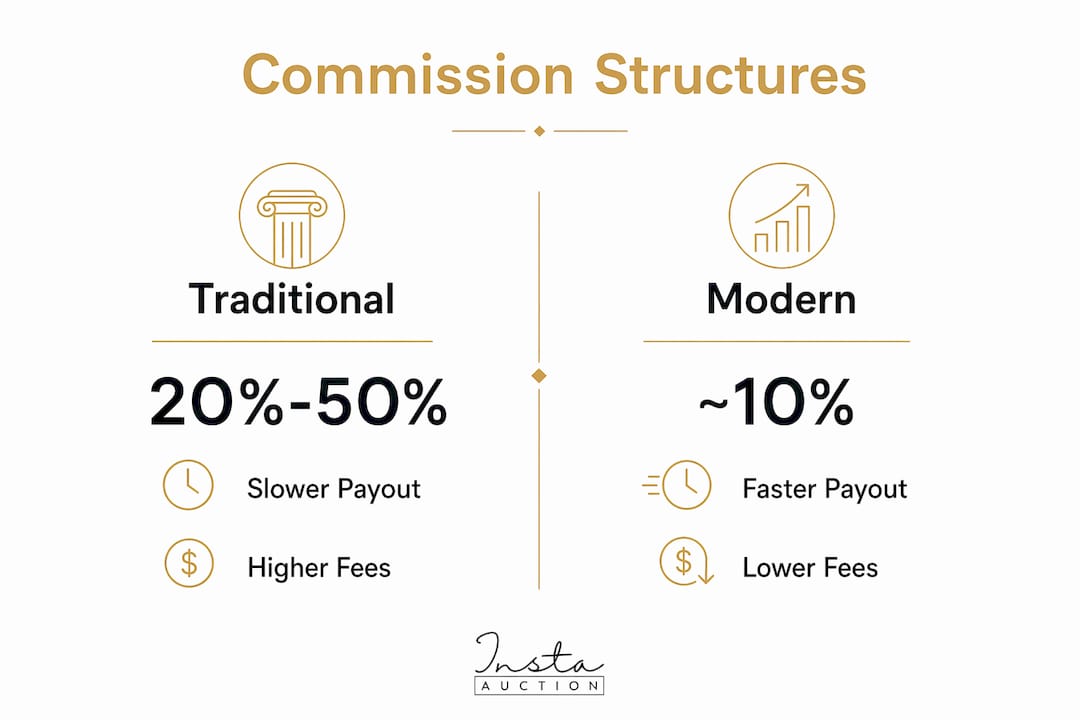
Niche online platforms charge commission rates around 10%, a fraction of what traditional houses charge. That difference directly increases your net return on every item sold.
Pro Tip: Always confirm the payout timeline in writing before signing a consignment agreement. Some traditional houses hold funds for 30–60 days, which matters if you need liquidity quickly.
What are the benefits and drawbacks of selling through consignment auctions?
Consignment auctions deliver advantages that fixed-price listings simply cannot match for the right category of item.
Key benefits:
- Competitive bidding drives prices up. When two or more motivated buyers want the same rare item, the price rises beyond any fixed listing you would have set.
- Expert marketing is included. The auction house photographs, describes, and promotes your items across multiple channels. You do not manage advertising.
- Fast selling cycle. Most auctions close within days of listing, unlike private sales that can sit for months.
- Access to a targeted buyer pool. Platforms like Insta-auction attract collectors and luxury buyers who are actively looking to spend.
Drawbacks to weigh:
- Commission fees reduce your gross return. Even at 10%, fees add up on lower-value items.
- Timing is rigid. You work around the auction schedule, not your own.
- Preparation takes effort. Poor photos or vague descriptions suppress bids.
Auction vs. fixed-price: which method fits your item?
Auctions perform best for rare, high-demand, or unique items where market competition drives value. Fixed-price sales suit popular items with established market prices. A limited-edition Hermès bag belongs in an auction. A standard Coach wallet does not.
| Item type | Best selling method | Reason |
|---|---|---|
| Rare antique or collectible | Auction | Competitive bids exceed fixed estimates |
| Designer luxury goods | Auction | Emotional appeal drives bidding wars |
| Common electronics | Fixed price | Established resale value; no bidding upside |
| Estate jewelry | Auction | Unique pieces attract specialist buyers |
| Mass-market clothing | Fixed price | Predictable demand; auctions add no value |
Buyers favor fixed-price listings for immediate purchases but actively seek auctions for unique finds. That buyer behavior is exactly what makes luxury consignment auctions so effective for sellers.
How to prepare luxury items for a consignment auction
Presentation is the single biggest variable a seller controls. Active seller involvement in curation leads to higher returns than leaving everything to the auction house.
Preparation checklist for consignors:
- Clean and restore items carefully. A professionally cleaned piece photographs better and signals quality to buyers. Do not over-restore antiques, as original patina adds value.
- Photograph from multiple angles. Show the front, back, hallmarks, serial numbers, and any flaws. Buyers bid with more confidence when they can see everything.
- Write detailed, honest descriptions. Include maker, age, materials, dimensions, and condition. Vague descriptions create doubt and suppress bids.
- Set a realistic reserve price. A reserve is the minimum price you will accept. Set it too high and the item passes unsold. Set it too low and you leave money on the table. Research recent comparable sales on platforms like Insta-auction before deciding.
- Gather provenance documents. Certificates of authenticity, original receipts, and appraisal letters increase buyer confidence and final sale prices.
Pro Tip: Study the compelling listing techniques used by top sellers before you submit your items. A single strong hero photo can increase bids by a measurable margin.
The most common seller mistake is submitting items without doing this homework. Sellers who curate and present their own items consistently outperform those who hand everything off and wait. Think of yourself as a partner in the sale, not a passive participant.
How to bid smartly at consignment auctions
Buyers who prepare before bidding consistently find better deals. Spontaneous bidding is how collectors overpay.
- Research every lot in advance. Review the item description, photos, and condition notes before the auction opens. Cross-reference comparable sales on platforms like Insta-auction or through public auction records.
- Set a firm maximum bid. Decide your ceiling before bidding starts and do not exceed it. Auction excitement is real and it clouds judgment.
- Understand all buyer fees. Most auction houses charge a buyer’s premium on top of the hammer price. A 15% buyer’s premium on a $2,000 lot means your actual cost is $2,300. Factor this in before you bid.
- Watch for phantom bids. Phantom bids, also called shill bids, are fake bids placed to artificially raise prices. Reputable platforms like Insta-auction prohibit this practice, but knowing the term helps you recognize suspicious bidding patterns.
- Bid on estate and luxury lots early. High-value lots attract the most attention in the final minutes. Placing an early maximum bid through an automated system protects your position without requiring you to watch the clock.
For collectors seeking rare finds, luxury item auction strategies make the difference between winning a coveted piece and losing it to a better-prepared bidder. The benefits of shopping consignment auctions for collectors include access to curated, appraised items that rarely appear in retail channels.
Pro Tip: Read the auction terms and conditions before registering. Buyer premiums, payment deadlines, and pickup requirements vary by platform and missing any of them can cost you the item or a penalty fee.

Specialized online platforms give buyers more flexibility than traditional houses, with extended bidding windows and detailed lot information available days in advance. That preparation time is a genuine advantage for serious collectors.
Key Takeaways
A consignment auction delivers the highest returns for sellers when items are rare, well-presented, and submitted on time, while buyers who research lots and set firm bid limits consistently find the best value.
| Point | Details |
|---|---|
| Commission rates vary widely | Niche online platforms charge around 10%; traditional houses can take 20%–50%. |
| Timing deadlines are strict | Advertising closes 2–3 weeks out; items must arrive at least 1 week before auction day. |
| Seller preparation drives results | Active curation, strong photos, and honest descriptions increase final sale prices. |
| Auctions suit unique items | Rare, luxury, or emotionally compelling items benefit most from competitive bidding. |
| Buyers must account for all fees | Buyer premiums add to the hammer price; calculate total cost before placing any bid. |
Why platform choice matters more than most sellers realize
Choosing between a traditional auction house and a modern online platform is the most consequential decision a consignor makes. I have watched sellers hand over estate jewelry to a traditional house, wait six weeks for a payout, and net less than 50 cents on the dollar after fees. The same items on a niche platform with a 10% commission and a one-week payout would have returned dramatically more.
The conventional wisdom says traditional houses bring prestige and therefore higher prices. That is true for a Sotheby’s-caliber painting. For most luxury items that families actually own, a well-run online platform with trained appraisers and a targeted buyer base outperforms the old model. Niche platforms offer flexible schedules and lower fees, and that combination compounds into real money over multiple items.
My honest observation after watching this market closely: sellers who stay actively involved, who write their own descriptions and push for accurate reserve prices, consistently outperform those who hand everything off. The auction house is your partner, not your agent. Treat it that way and your results will show it. For estate situations where emotion runs high, resources like online auctions for estate sales can make the process feel less transactional and more respectful of what you are letting go.
— Admin
Insta-auction’s resources for luxury consignment sellers and buyers
Insta-auction specializes in pre-loved luxury items and collectibles, with trained appraisers who market each piece across multiple digital channels to reach the right buyers.
Sellers get access to expert guidance on how to sell luxury items effectively, from photography to reserve pricing. Buyers can browse curated luxury goods auctions and bid with confidence knowing every lot has been appraised. Insta-auction also donates a portion of every sale to charity, so your transaction supports something beyond the transaction itself. Ready to consign? The consignor sign-up form takes minutes to complete.
FAQ
What is a consignment auction?
A consignment auction is a sale where an owner entrusts items to an auction house, which sells them on the owner’s behalf and takes a commission from the final price.
How much do sellers earn from a consignment auction?
Consignors typically earn 60%–75% of the final sale price on modern platforms, with payout often issued within one week after the auction closes.
What items sell best at consignment auctions?
Rare, unique, or luxury items such as antique jewelry, designer goods, and collectibles perform best because competitive bidding drives prices above any fixed-price estimate.
How do buyers avoid overpaying at auction?
Set a firm maximum bid before the auction opens, factor in the buyer’s premium, and watch for phantom bids, which are fake bids placed to inflate prices artificially.
How early should sellers submit items for a consignment auction?
Sellers should plan for advertising deadlines 2–3 weeks before the event and delivery deadlines at least one week prior to auction day.