

Buy standout handbags, sculptural jewelry, bold sunglasses, and heritage watches. That’s where design and resale value converge in 2026. Whether you’re building a wardrobe or a collection, the right piece does both jobs at once.
The categories that matter most right now: handbags, sunglasses, watches, sculptural jewelry, statement belts, scarves, and hats, small leather goods, and novelty items like bag charms and brooches. Here’s the quick read on each:
- Handbags: Buy for utility (canvas totes, structured satchels) or invest in iconic silhouettes from Hermès and Chanel, where resale value is documented and real.
- Sculptural jewelry: Tiffany & Co. signed pieces and heritage gold hold value; fashion-line jewelry typically does not.
- Watches: Mechanical movements from established houses retain value; quartz fashion watches are wardrobe purchases, not investments.
- Sunglasses and belts: Strong trend plays for 2026, especially oversized frames and logo belts; buy for style, not resale.
- Scarves, hats, and small leather goods: Accessible entry points into heritage brands; Hermès silk scarves in particular have a secondary market.
If you’re hunting for pre-owned pieces or want to sell something from your collection, Insta-auction’s authenticated auction platform is worth bookmarking. It surfaces hard-to-find lots with expert appraisal and nationwide shipping.
Table of Contents
- What are the best designer accessories to buy right now?
- How to choose the right designer accessories for your wardrobe and budget
- Accessories as investments: what actually holds value and why
- Where to buy designer accessories safely in the U.S.
- Authentication: how to spot fakes and verify provenance before you buy
- Care: how to store and maintain designer accessories so they keep value and look great
- Brands and designers worth watching for style and resale potential
- Key Takeaways
- Why authenticated auctions deserve more credit than they get
- Insta-auction brings expert appraisal to pre-loved luxury accessories
- Useful sources
- FAQ
What are the best designer accessories to buy right now?
Fall 2026 runway reports from WWD confirm what buyers have been feeling for a season: accessories are no longer finishing touches. They’re the point. Clothes have gone quieter and more pragmatic, which means your bag, your earrings, and your belt are doing the heavy lifting.
Handbags
The defining category, full stop. Structured silhouettes in caviar leather or coated canvas are having a moment, and the case for buying one has never been cleaner: you wear it daily, it ages well, and if you choose wisely, it holds value. The Hermès Kelly and Chanel Classic Flap are canonical investment examples with documented resale value. Celine’s Arc de Triomphe tote and The Row’s Margaux bag sit in the aspirational tier, beloved for their quiet, no-logo confidence.
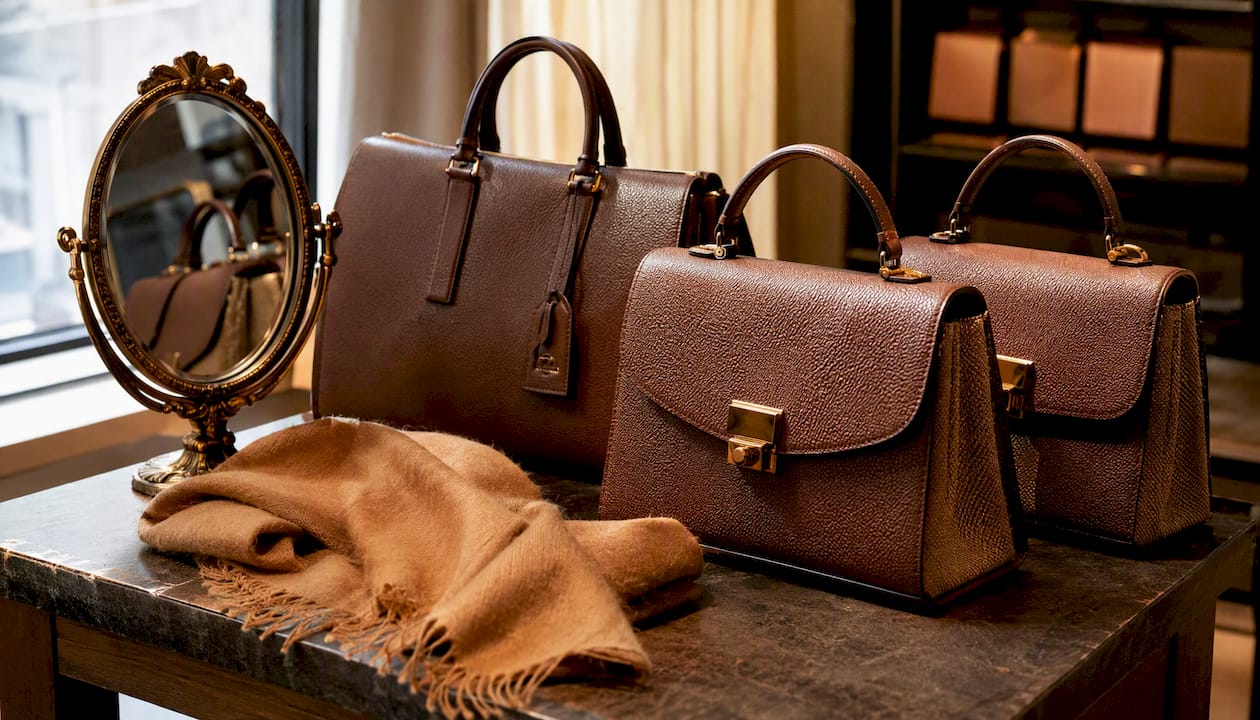
For trend-forward buyers, fuzzy textures and sculptural top-handle bags are all over the fall 2026 shows. Beautiful to look at, less certain on resale.
Sunglasses
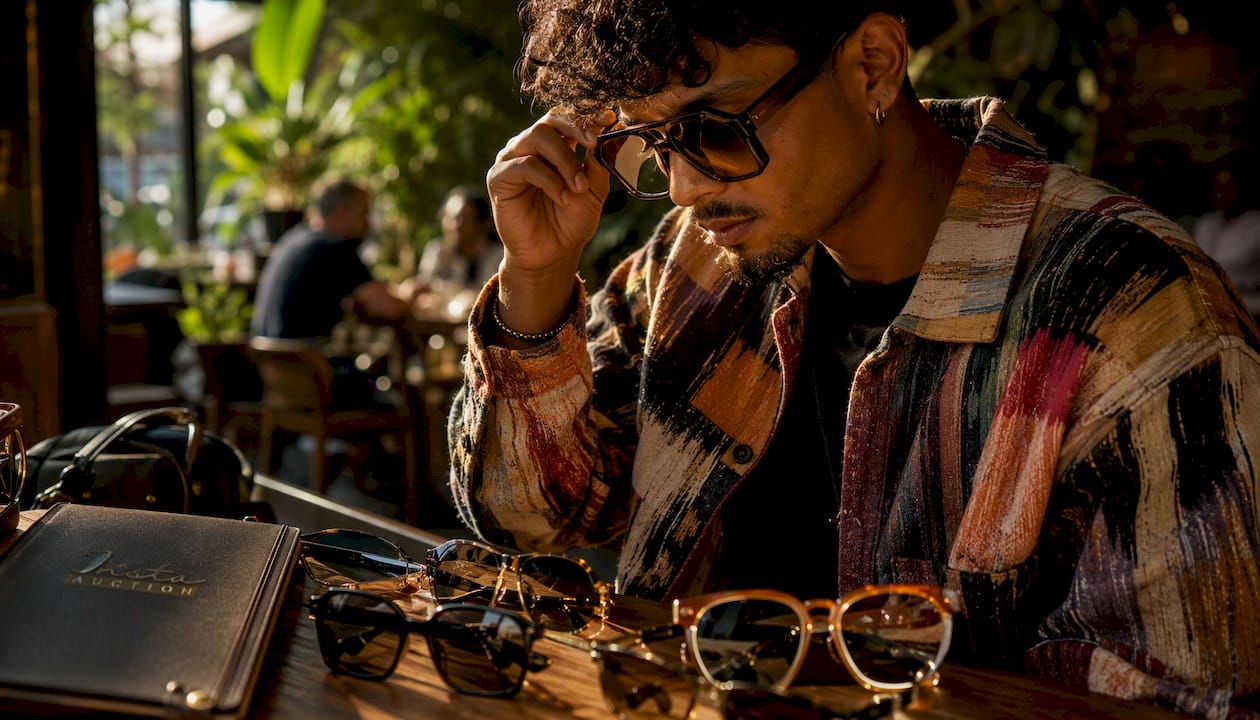
Oversized frames, geometric shapes, and shield silhouettes are the shapes buyers flagged at the fall 2026 shows. Celine’s acetate frames and The Row’s understated styles are the names to know. Sunglasses depreciate quickly, so buy what you’ll actually wear for years rather than what’s most viral right now.
Watches
A mechanical watch from a heritage house is one of the few accessories that can genuinely appreciate. The key word is mechanical: a documented movement, service records, and original papers matter enormously for resale. Fashion watches without these elements are wardrobe purchases, and there’s nothing wrong with that, but don’t confuse them with investments.
Sculptural and statement jewelry
Archive Luxury’s fine jewelry investment guide puts it plainly: most designer jewelry loses a significant portion of retail value the moment you leave the boutique. The exception is signed heritage work. Tiffany & Co.’s iconic pieces, particularly those with documented provenance and hallmarks, retain a substantial portion of retail value on resale. The lesson: buy fashion-line jewelry for joy, buy signed heritage pieces if value matters.
Brooches are having a genuine runway moment in 2026, appearing on Chanel and several emerging houses. They’re also one of the more affordable entry points into a heritage brand.
Statement belts
Logo belts and wide sculptural styles are strong for fall 2026. Hermès H belts in particular have a secondary market that holds up, especially in classic colors with original hardware. Most other belts are fashion purchases.
Scarves and hats
Hermès silk scarves are the rare accessory that functions as both a wearable piece and a collectible. Limited colorways and artist collaborations command premiums on the secondary market. Bucket hats and oversized knit styles are trending for fall, but treat those as seasonal buys.
Small leather goods
Card cases, compact wallets, and key holders from Chanel, Hermès, or Celine are smart entry points. They carry the brand’s craftsmanship at a fraction of the bag price, and they make excellent gift ideas. Resale is modest but real for heritage pieces in excellent condition.
Novelty items: bag charms and brooches
Vogue’s fall 2026 trend coverage called out kooky pearls and fuzzy bag charms as standout details. These are personality-first purchases. Buy them because they make you happy, not because they’ll hold value.
How to choose the right designer accessories for your wardrobe and budget
Three questions cut through the noise: Does it fit your existing wardrobe? Will you use it often enough to justify the price? And does the resale market support the purchase if your priorities change?
That framework maps cleanly onto three budget tiers:
| Budget Tier | Typical Price Range | Best Categories | Resale Outlook |
|---|---|---|---|
| Entry-level designer | $200–$800 | Small leather goods, scarves, sunglasses, brooches | Modest; condition matters |
| Aspirational | $800 | Structured handbags, statement jewelry, belts | Moderate; brand and silhouette dependent |
| Investment-grade | — | Iconic handbags, signed jewelry, mechanical watches | Strong for heritage icons with documentation |
Before you buy, run through this checklist:
- Fit: Does the silhouette work with at least five things already in your closet?
- Material: Is the leather, hardware, or stone appropriate for how you’ll use it?
- Condition (pre-owned): Request photos of all four sides, hardware, interior, and any serial or date codes.
- Documentation: Original receipt, dust bag, box, and authenticity card add measurable resale value.
- Intent: Are you buying to wear, to hold, or both? Your answer changes the right choice.
Pro Tip: For daily use, caviar leather and coated canvas outperform lambskin and exotic skins by a wide margin. Lambskin scratches easily and shows wear fast. Save the delicate materials for occasion pieces you’ll carry a handful of times a year.
Auctions and pre-owned markets are most relevant at the aspirational and investment-grade tiers, where price discovery matters and the gap between retail and secondary market pricing can be significant.
Accessories as investments: what actually holds value and why
Most designer accessories are consumer purchases that depreciate. That’s not a criticism; it’s just accurate. The pieces that reliably hold or appreciate in value are a narrow set, and knowing which ones they are saves you from expensive mistakes.
The global luxury resale market is projected to grow significantly by 2030, with handbags anchoring the category. Within that market, leather goods represent a large share of the preowned segment, and Hermès and Chanel silhouettes show notable appreciation metrics per resale indexes.
The three pillars of investment-grade accessories: heritage brand longevity (decades of consistent craftsmanship and pricing power), scarcity or limited production (waitlists, limited colorways, discontinued styles), and a mature secondary market that provides real liquidity and transparent price discovery. Remove any one of these and the investment case weakens considerably.
The Hermès Birkin and Chanel Classic Flap are the clearest examples of all three pillars working together. Both have outperformed many traditional investments over long horizons, though it bears repeating that this applies to a very specific subset of pieces in excellent condition with full documentation.
For jewelry, the calculus is different. Most designer-line pieces retain only a fraction of retail value unless hallmarks, gemstone reports, and signed provenance are present. A Tiffany & Co. piece with its original receipt and box is a different asset than an unboxed fashion ring from a trend-driven label.
Watches require movement verification and service records. A mechanical watch without paperwork is worth significantly less than the same reference with a complete history.
The practical decision: if you’re buying primarily to wear, choose what you love and care for it well. If you’re buying with value in mind, stick to the heritage icons, buy with documentation, and treat the secondary market as your exit strategy.
Where to buy designer accessories safely in the U.S.
Choose the channel that matches your priorities: instant availability, price, authentication, or selection. No single channel wins on all four.
- Authorized boutiques: The safest source for new pieces. Full retail price, no authentication risk, and you get original packaging. The tradeoff is price and availability, particularly for waitlisted items.
- Department stores: Convenient for entry-level and aspirational pieces. Nordstrom and Saks carry a curated range. Authentication is not a concern for new items, but selection is narrower than a brand boutique.
- Authenticated resale marketplaces: Online platforms with in-house authentication teams. Good for aspirational pieces at below-retail prices. Look for condition grading, certificates, and return windows before committing.
- Curated vaults and consignment stores: Curated vault models inspect, condition-grade, and ship with certificates, reducing counterfeit risk compared with open consumer marketplaces. Ideal for buyers who want a hands-off, verified experience.
- Auction platforms: The right channel for investment-grade pieces, rare silhouettes, estate lots, and pre-owned items where price discovery matters. Auction platforms and authenticated resale environments enable verified provenance and better price discovery that retail simply cannot match. Insta-auction’s luxury goods auction channel is built specifically for this: expert appraisal, digital marketing across multiple channels, and nationwide flat-rate shipping.
When auctions make the most sense: you’re looking for a discontinued silhouette, a signed piece from an estate, or an investment-grade item where you want transparent price discovery rather than a fixed retail or resale price. For everyday aspirational purchases where speed and simplicity matter more, authenticated resale or a boutique is the faster path.
Before bidding or buying pre-owned, prepare: know the condition grade you’ll accept, have your documentation checklist ready, and understand the platform’s buyer protection and return policy. Insta-auction’s consignment auction guide walks through both sides of the transaction in detail.
Authentication: how to spot fakes and verify provenance before you buy
Insist on serial numbers or hallmarks, original documentation, consistent brand signatures, and high-resolution photography. If any of those are missing, adjust your price expectation accordingly, or walk away.
Authentication checks vary by category:
Handbags: Look for date codes or serial numbers (location varies by brand), consistent stitching count and thread color, hardware weight and engraving quality, and interior lining alignment. The Insta-auction Chanel authentication guide covers brand-specific serial code placement and signature details worth knowing before you bid.
Jewelry: Hallmarks indicating metal purity (925 for sterling, 750 for 18k gold), gemstone reports from GIA or equivalent labs, and the brand’s signature engraving. Tiffany & Co. pieces should carry the brand stamp and, for fine pieces, a gemstone certificate.
Watches: Movement verification by a qualified watchmaker, original papers and box, and a documented service history. A reference number that matches the case back and papers is non-negotiable for investment-grade pieces.
Photo requests to make before buying pre-owned:
- All four exterior sides in natural light
- Close-up of hardware (clasps, zippers, feet)
- Interior, including any pockets and lining seams
- Serial number, date code, or hallmark (in focus)
- Original receipt, authenticity card, dust bag, and box
- Any visible wear, scratches, or repairs
Walk away when: the seller cannot provide a clear photo of the serial number or hallmark; hardware looks inconsistent with the brand’s known specifications; the price is significantly below market without a clear explanation; or photos are low-resolution and taken in artificial light. A legitimate seller has nothing to hide and every reason to document the piece thoroughly.
Authentication services and auction house verification add a meaningful layer of protection. Platforms with in-house experts who physically inspect items before listing reduce your risk substantially compared with peer-to-peer marketplaces where the seller’s word is the only guarantee.
Care: how to store and maintain designer accessories so they keep value and look great
Condition is the single biggest variable in resale pricing. A pristine bag with its original box, dust bag, and purchase receipt can command up to 20% higher resale prices than an identical bag missing those elements. That premium is worth protecting from day one.
Storage and daily care by category:
- Leather bags: Store upright, stuffed with acid-free tissue to hold shape, inside the original dust bag. Keep away from direct sunlight and humidity extremes. Never store in plastic, which traps moisture.
- Jewelry: Individual pouches or a lined jewelry box with separate compartments to prevent scratching. Store pearls flat; keep silver in anti-tarnish cloth.
- Sunglasses: Always in a hard case. Wipe lenses with a microfiber cloth, never a paper towel or clothing fabric.
- Silk scarves: Rolled rather than folded to prevent permanent crease lines. Store in a cool, dry drawer away from light.
- Watches: A watch winder for automatics if worn regularly; a padded watch box for storage. Service mechanical movements every 3–5 years.
- Retain all original packaging: Box, dust bag, authenticity card, and receipt. These are not decorative; they are documentation that directly affects resale value.
Pro Tip: Climate-controlled storage, ideally between 60–70°F with 40–50% relative humidity, is the standard for serious collectors. For exotic skins like python or ostrich, avoid conditioning products not specifically formulated for that material. When in doubt, consult a professional leather restorer rather than attempting DIY treatment.
For cleaning, a barely damp cloth handles most surface dust on smooth leather. Structured conditioning with a product like Leather Honey works for vegetable-tanned leathers. Anything beyond routine maintenance, including color restoration or hardware re-plating, belongs with a professional restoration service. DIY attempts on high-value pieces almost always reduce resale value rather than improve it.
Brands and designers worth watching for style and resale potential
Split the field into two groups: heritage investment-tier houses and contemporary names that are either trend-forward or building toward collectible status.
Heritage investment-tier
Chanel remains the most liquid brand in the pre-owned handbag market. The Classic Flap and 2.55 have appreciated significantly since 2010, driven by systematic retail price increases. Signed Chanel jewelry and accessories carry the brand’s authentication infrastructure and secondary market depth.
Hermès is the benchmark. The Birkin and Kelly have documented appreciation histories, and the brand’s scarcity model, including waitlists and allocation systems, keeps secondary market prices elevated. Hermès silk scarves and H belts also have real secondary markets, making them accessible entry points into the brand’s collectible ecosystem.
Tiffany & Co. anchors the fine jewelry tier. Signed pieces with original packaging and gemstone documentation retain 60–85% of retail on resale, per Archive Luxury’s research. The Return to Tiffany collection and iconic heart tag pieces have consistent secondary market demand.
Contemporary and near-heritage names to watch
Celine under Hedi Slimane has built a strong following for its clean, logo-forward bags and sunglasses. The Arc de Triomphe tote and Triomphe canvas pieces are becoming the aspirational standard for a certain aesthetic. Resale is solid but not yet at heritage levels.
The Row is the quiet luxury standard-bearer. Mary-Kate and Ashley Olsen’s approach, including the pearl revival Vogue flagged for fall 2026, favors heirloom-quality materials and understated design. The brand’s pieces are becoming collectible among a specific, devoted audience.
Smaller artisan and vintage labels offer something neither heritage nor contemporary houses can: genuine singularity. A signed piece from a mid-century American jewelry maker or a deadstock scarf from a defunct French house carries personality and provenance that mass-market designer goods simply cannot replicate. The 2026 shift toward individuality is driving real demand for exactly these pieces.
Within any brand, prioritize iconic silhouettes over seasonal novelties, limited editions over core catalog, and signed or numbered pieces over unsigned production runs.
Key Takeaways
The strongest designer accessory purchases combine trend relevance with resale awareness: choose heritage brands, insist on documentation, and use authenticated channels for pre-owned pieces.
| Point | Details |
|---|---|
| Prioritize heritage for value | Hermès, Chanel, and Tiffany & Co. have documented resale strength; most other pieces depreciate. |
| Documentation adds real money | Original box, dust bag, and receipt can add up to 20% to resale price. |
| Match channel to intent | Boutiques for new pieces; authenticated auctions for rare, investment-grade, or estate finds. |
| Authentication is non-negotiable | Always request serial numbers, hallmarks, and multi-angle photos before buying pre-owned. |
| Use Insta-auction for hard-to-find lots | Insta-auction offers expert appraisal, authenticated pre-owned luxury, and nationwide shipping for buyers and sellers. |
Why authenticated auctions deserve more credit than they get
The conventional wisdom is that boutiques are safe and auctions are risky. That framing is outdated, and it costs buyers real money.
The boutique is safe, yes. But it’s also full retail price, zero negotiation, and zero access to discontinued or rare pieces. For anyone building a collection with any awareness of value, those are significant constraints. The pre-owned and auction market has matured considerably. Professional platforms now employ in-house gemologists, trained authenticators, and condition-grading systems that are, in many cases, more rigorous than what a department store counter offers.
What auctions actually do well: they surface pieces that don’t exist in retail channels anymore, they create transparent price discovery through competitive bidding, and they connect sellers who have something rare with buyers who genuinely want it. That’s a different value proposition than a boutique, not an inferior one.
The charitable dimension matters too. Insta-auction donates a portion of every sale to selected charities, which means your purchase does something beyond your wardrobe. That’s not a reason to overpay for a piece, but it’s a real differentiator in a market where most platforms are purely transactional.
The honest position: for everyday aspirational purchases, a boutique or authenticated resale platform is perfectly fine. For anything rare, estate-sourced, or investment-adjacent, an auction with expert appraisal is often the smarter channel. The two approaches aren’t in competition. They serve different moments in a collector’s life.
Insta-auction brings expert appraisal to pre-loved luxury accessories
Pre-loved luxury accessories at auction prices, verified by trained experts before a single bid is placed. That’s the Insta-auction difference for buyers who want something specific and sellers who want a fair price without leaving money on the table.
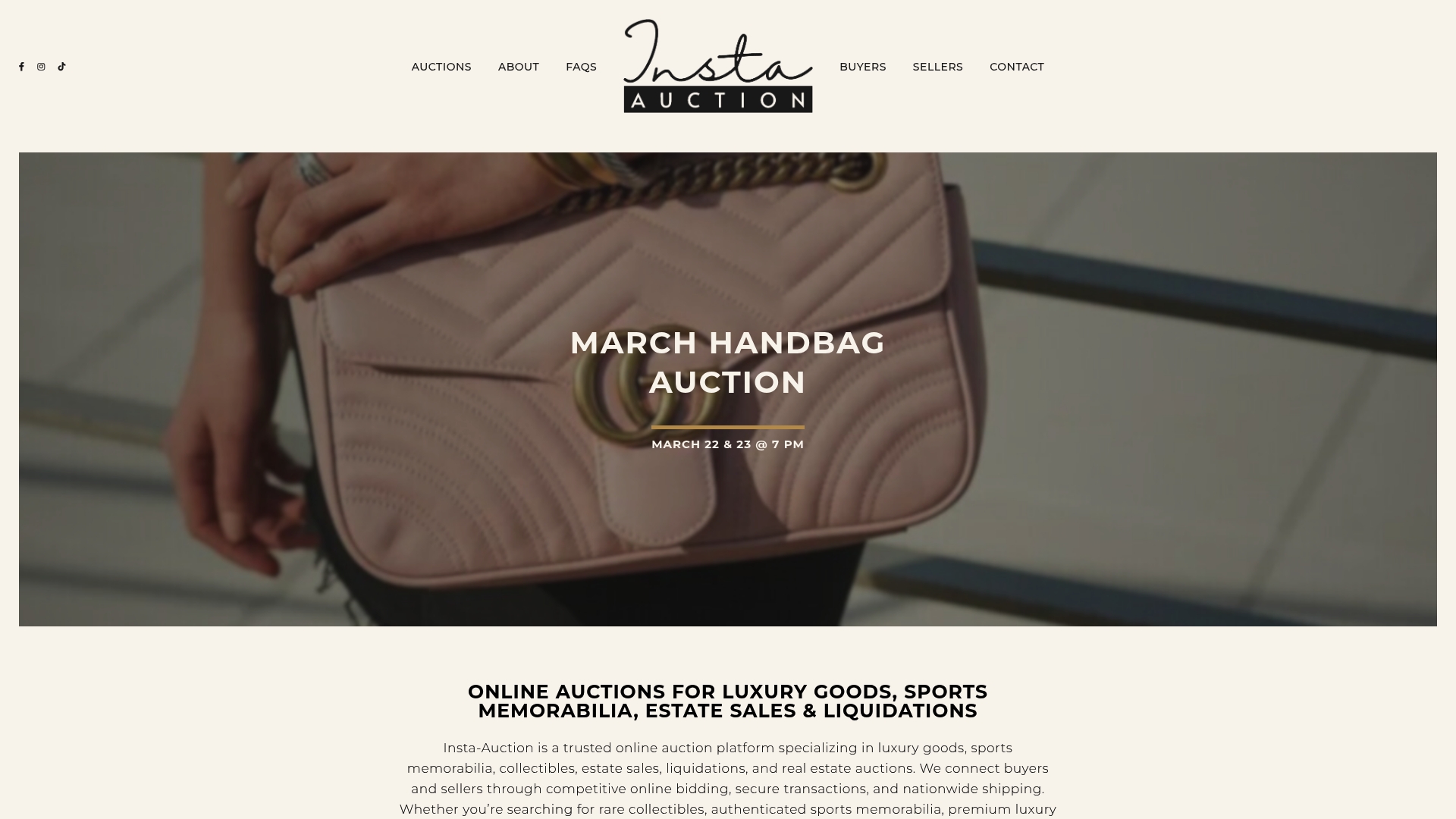
Three reasons the platform works for designer accessories:
- Expert appraisal: Every item is evaluated by trained specialists who understand brand authentication, condition grading, and market pricing.
- Higher realized prices for sellers: Competitive bidding and targeted digital marketing across multiple channels consistently produce stronger outcomes than fixed-price consignment.
- Nationwide reach for buyers: Flat-rate shipping means a rare Hermès scarf or a signed Tiffany piece from an estate sale in another state is as accessible as something local.
Ready to browse current lots or consign a piece from your collection? Visit the Insta-auction luxury goods auction page to see what’s available, or review the auction-ready luxury items guide to prepare your consignment.
Useful sources
The following sources informed the research and claims in this article:
- The Luxury Handbag as Investment: Building a Collection That Holds Its Value in 2026 (Robb Chateau) — resale market projections, investment-grade criteria, and the 20% documentation premium.
- Fine Jewelry Investment Guide: What Holds Value (Archive Luxury) — retail value retention data for designer and heritage jewelry.
- Preowned Luxury Is Outpacing First-Hand: Bain & Co.’s 2026 Resale (Curated Sense) — leather goods market sizing and Hermès/Chanel appreciation metrics.
- Top Accessories Seen at Fall 2026 Fashion Shows (WWD) — buyer-reported trend signals from the fall 2026 runway season.
- From Kooky Pearls to Fuzzy Purses: Standout Fall 2026 Accessory Trends (Vogue) — editorial trend coverage including The Row, Celine, and novelty accessories.
- Trend Report: Accessories Summer Through to Autumn 2026 (FashionCapital) — shift toward vintage and artisan-crafted pieces and individuality-driven buying.
- United States Secondhand Luxury Goods Market Size and Trends (MarkWide Research) — U.S. market sizing and category concentration data.
FAQ
What designer accessories are trending right now?
Statement handbags, oversized sunglasses, sculptural jewelry, brooches, and textured materials like suede and croc are the standout categories for fall 2026, per WWD buyer reports and Vogue’s runway coverage. The Row’s pearl revival and Celine’s structured bags are among the most-cited specific references.
Which luxury items are most likely to hold their value?
Hermès Birkins and Kelly bags, Chanel Classic Flaps, and signed Tiffany & Co. fine jewelry with original documentation are the most consistently cited investment-grade pieces. Most other designer accessories depreciate; condition and paperwork are the biggest variables.
What are the best designer accessories for someone on a budget?
Entry-level branded accessories, including small leather goods, silk scarves, and brooches from heritage houses, typically range from $200–$800 and offer genuine brand craftsmanship without the price of a full handbag. Pre-owned platforms and authenticated auctions like Insta-auction can bring aspirational pieces into that range.
How do I know if a pre-owned designer item is authentic?
Request photos of the serial number or hallmark, all exterior sides, hardware close-ups, and the interior lining. Original packaging, receipts, and authenticity cards are strong supporting signals. When in doubt, use a platform with in-house authentication experts rather than a peer-to-peer marketplace.
Are designer accessories worth buying pre-owned?
For investment-grade pieces, pre-owned is often the smarter entry point: you avoid the steepest depreciation curve and can access discontinued silhouettes. The key is buying through authenticated channels with condition grading and buyer protections, not open marketplaces where verification is the seller’s word alone.