

Estate asset valuation, the process of determining the fair market value of luxury items and collectibles within an estate, is the single most consequential step between a lifetime of collecting and a financially sound legacy. Get it wrong and you face IRS disputes, family conflict, and forced sales at a fraction of true value. Get it right and heirs receive maximum proceeds, tax filings hold up under scrutiny, and the collection’s story transfers intact.
Here is what every seller and buyer of pre-loved luxury goods needs to know before the estate process begins:
- Fair market value, not insurance replacement cost, governs estate tax filings and auction pricing
- USPAP-compliant appraisals are the only valuations the IRS and courts accept as defensible
- Provenance and documentation consistently push auction prices above comparable undocumented items
- Liquidity planning prevents heirs from selling at distressed prices to cover tax obligations
- Insta-auction’s trained experts combine specialist appraisals, provenance presentation, and targeted digital marketing to maximize realized prices
Table of Contents
- What does estate asset valuation actually involve?
- How provenance transforms an item’s auction price
- Why liquidity planning protects your heirs
- How expert online auctioneers identify hidden value in luxury estate assets
- Handling and storage of delicate luxury items during estate settlement
- How to authenticate pre-loved luxury items and collectibles
- Market trends and timing that affect luxury collectible valuations
- Legal considerations and tax implications for luxury estate assets
- Insta-auction makes estate selling straightforward for collectors
- Key Takeaways
- FAQ
What does estate asset valuation actually involve?
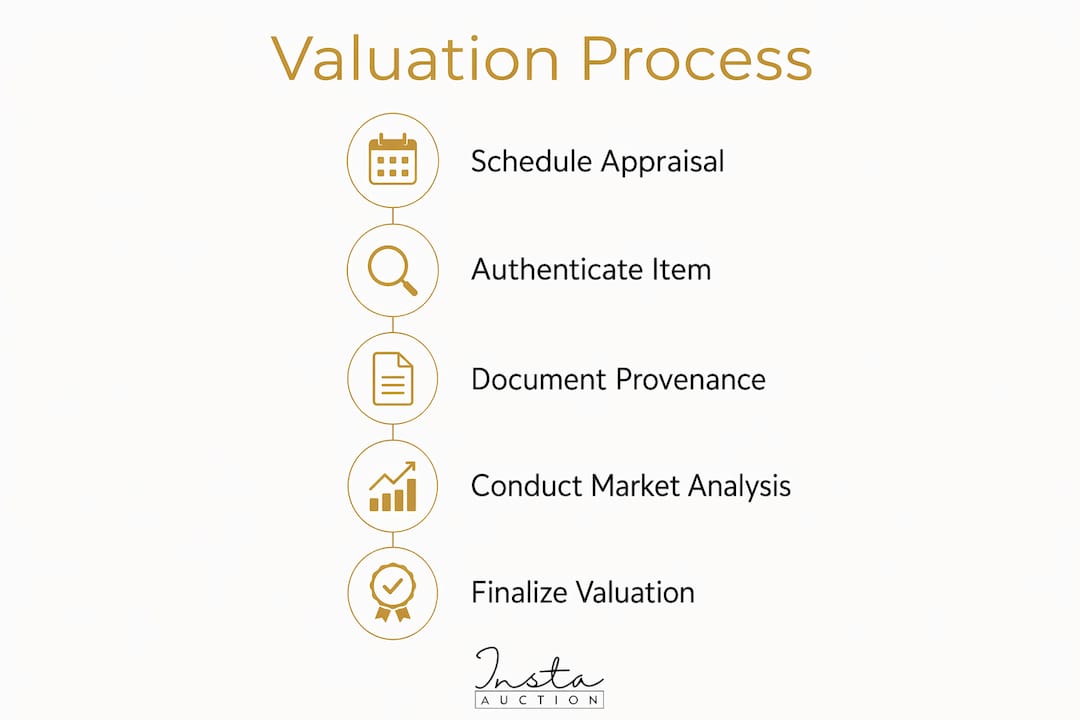
The core steps of a credible estate appraisal process follow a clear sequence, and skipping any one of them creates problems downstream.
- Full inventory first. Photograph every item, note condition, record location, and log any known history. For art, include artist, title, medium, dimensions, and exhibition records. For collectibles like coins or stamps, include certificates of authenticity.
- Safeguard before appraising. Climate damage and theft are the two fastest ways to destroy collectible value during estate administration. Securing the property comes before any valuation work.
- Hire the right specialist. A generalist appraiser works for furniture and household goods. Fine art, jewelry, rare watches, and high-value memorabilia each require a specialist with a current designation from a recognized organization such as the Appraisers Association of America or the American Society of Appraisers.
- Understand the valuation standard. Insurance appraisals typically exceed fair market value and are rejected by the IRS for estate tax purposes. than fair market value and are rejected by the IRS for estate tax purposes. Only a USPAP-compliant fair market value appraisal belongs on Form 706.
- Anchor comparables to the date of death. The IRS requires valuations based on what a willing buyer and seller would have agreed to on that specific date. Later sales, even dramatically higher ones, are inadmissible as primary evidence.
- Prepare the documentation package. The appraisal report must include the appraiser’s qualifications, methodology, comparable sales, and a USPAP compliance statement. Missing any element gives the IRS grounds to reject it.
Pro Tip: Engage a neutral fiduciary early. Sentimental attachment routinely inflates perceived value and triggers family disputes. An independent fiduciary removes that variable and manages the process impartially.
How provenance transforms an item’s auction price
Provenance is not a nice extra. Estate planning attorneys consistently identify comprehensive documentation as the single greatest factor in maximizing estate value at auction.
- Original purchase receipts establish acquisition cost and chain of ownership
- Certificates of authenticity confirm the item is what it claims to be
- Exhibition history and literary references add cultural weight that bidders pay for
- Prior appraisals create a documented valuation history, which supports current pricing
- Restoration records show care and condition management over time
Buyers at auction pay a real premium for authenticated, provenance-backed collectibles because documentation eliminates the risk of buying a forgery or a disputed piece. That confidence translates directly into higher bids. For autograph authentication and similar collectibles, third-party verification from a recognized service is often the difference between a commodity price and a collector price.
Why liquidity planning protects your heirs
Without a liquidity strategy, heirs face a painful choice: sell collectibles quickly at whatever price the market offers, or delay estate settlement and accumulate penalties. Lack of liquidity forces quick sales at below-market prices, and the damage compounds when multiple heirs receive unequal distributions as a result.
- Dedicated liquid reserves cover estate taxes, storage, appraisal fees, and executor costs without touching the collection
- Prior gifting strategies can reduce the taxable estate while the collector is still alive
- Trusts provide structured management instructions and can hold collectibles outside probate
- Executor selection matters enormously. The person managing a luxury collectible estate needs familiarity with specialist appraisers, auction platforms, and the timelines involved
Pro Tip: Update appraisals every few years, not just at death. Current valuations let you plan cash reserves accurately and avoid the shock of a collection that has appreciated far beyond your estate’s liquid assets.
How expert online auctioneers identify hidden value in luxury estate assets
Most casual sellers look at a piece and see what they paid for it. Expert auctioneers look at the same piece and see what the current market will pay, which is often a very different number.
- Market analytics identify which categories are trending and which are cooling, so timing a sale to peak demand is a deliberate choice, not luck
- Condition assessment by a trained eye catches restoration potential or original features that casual inspection misses
- Authentication work by specialists confirms legitimacy and removes buyer hesitation
- Targeted digital marketing reaches the specific collector communities most likely to bid competitively
Insta-auction’s approach combines all of these elements. Trained experts identify hidden value through specialist appraisals and provenance presentation, then market items across digital channels to attract premium bidders. The platform also donates a portion of every sale to selected charities, which adds a community dimension that resonates with buyers who care about where their money goes.
Pro Tip: Ask any auction service whether they use category specialists or generalists. A specialist in mid-century watches will consistently outperform a generalist when selling a Rolex from an estate.

Handling and storage of delicate luxury items during estate settlement
Fiduciaries have a legal duty to inventory and safeguard tangible assets immediately after death, and the practical steps are specific. Change the locks on any unoccupied property. Update alarm codes, especially when family members or others had access during the decedent’s life. Move fragile items out of storage units that lack temperature control.
Fine art, vintage textiles, wine, and certain watches require climate-controlled environments with stable humidity. Exposure to heat fluctuation, direct sunlight, or moisture can cause irreversible damage that no appraisal can recover. Jewelry and small high-value items belong in a secure facility or safe deposit box during the settlement period. Document the condition of every item with photographs before moving it, so any damage that occurs in transit is clearly attributable and insurable.
How to authenticate pre-loved luxury items and collectibles
Authentication is the process of confirming that an item is genuinely what it is represented to be, and the criteria vary by category. For fine art, a qualified appraiser examines physical characteristics, provenance documents, and comparable auction records. For jewelry, gemological certification from a recognized laboratory establishes stone identity and quality grades. For memorabilia and signed items, third-party authentication services provide certificates that the secondary market recognizes and trusts.
The IRS is explicit that a qualified appraiser must hold a designation from a recognized professional organization, have at least two years of relevant experience, and have no financial interest in the property being appraised. An auction house that offers to appraise an item it also wants to consign has a conflict of interest the IRS will notice. Independence is not optional; it is a legal requirement for the appraisal to be accepted.
Market trends and timing that affect luxury collectible valuations
The luxury collectible market moves in cycles, and the category matters as much as the item. Vintage watches, rare whisky, and sports memorabilia have seen sustained demand growth. Estate sellers who understand current market conditions can time auction listings to coincide with peak collector interest rather than accepting whatever the market offers at the moment of settlement.
Seasonal patterns also play a role. Major auction houses report stronger results in spring and fall, when collector activity concentrates around established sale calendars. Online auction platforms extend that window by reaching global buyers year-round, which is a structural advantage for estate sellers who cannot wait for a single annual sale event. Knowing which items perform best at auction in the current market is the starting point for any timing decision.
Legal considerations and tax implications for luxury estate assets
The federal estate tax exemption in 2025 was set at $13.99 million for individuals and $27.98 million for married couples. Estates exceeding those thresholds must file IRS Form 706 within nine months of the date of death. For any single item of art or personal property appraised at $50,000 or more, the IRS offers a Statement of Value under Revenue Procedure 96-15, which allows an estate to get advance approval of a valuation before filing. The current fee is $8,400 for up to three items.
Collectibles also carry a federal capital gains tax rate of 28%, higher than the standard long-term rate for most other assets. State taxes vary. Working with an estate planning attorney and a tax advisor who understand the specific rules for art and collectibles is not optional for estates with meaningful collections.
Insta-auction makes estate selling straightforward for collectors
Settling an estate with luxury collectibles involves appraisals, documentation, timing decisions, and finding buyers who will actually pay what the items are worth. That is a lot to manage while also handling everything else an estate requires.
Insta-auction handles the expert side of that process for you. Trained specialists appraise and authenticate your items, build out provenance presentations that give buyers confidence, and market everything across targeted digital channels to reach the collectors most likely to bid competitively. The result is consistently higher realized prices than traditional estate sale methods, with the added benefit that a portion of every sale goes to charity. If you have pre-loved luxury items or collectibles to sell from an estate, submit your items here to get started.
Key Takeaways
Proper estate asset valuation requires USPAP-compliant fair market appraisals, thorough documentation, and strategic timing to protect heirs and maximize proceeds from luxury collectibles.
| Point | Details |
|---|---|
| Use fair market value, not insurance value | Insurance appraisals typically exceed fair market value and are rejected by the IRS for estate tax purposes. |
| Anchor appraisals to the date of death | The IRS requires comparables from a defined window around the valuation date; later sales are inadmissible as primary evidence. |
| Provenance is the biggest value multiplier | Comprehensive documentation is the single greatest factor in maximizing estate value at auction, per estate planning attorneys. |
| Plan liquidity before death, not after | Dedicated liquid reserves prevent forced below-market sales of collectibles to cover estate taxes and settlement costs. |
| Insta-auction | Trained specialists appraise, authenticate, and market luxury estate items across digital channels to attract competitive bidders. |
FAQ
What is the difference between fair market value and insurance value in an estate?
Fair market value is what a willing buyer would pay a willing seller with no pressure on either side, and it is the standard the IRS requires for estate tax purposes. Insurance appraisals reflect replacement cost, which typically runs 2–3 times higher and is not accepted for estate tax filings.
When does an estate need a qualified appraiser for luxury items?
The IRS requires an expert appraisal under oath for household and personal effects with values over certain thresholds, and a qualified appraisal by a qualified appraiser for individual items meeting IRS criteria.
How does provenance affect what a collectible sells for at auction?
Items with documented provenance, including purchase receipts, certificates of authenticity, and exhibition history, consistently command higher prices than comparable undocumented pieces because buyers can verify what they are purchasing.
What is the federal estate tax exemption for 2026?
The federal estate tax exemption was $13.99 million for individuals and $27.98 million for married couples in 2025. Estates exceeding those thresholds must file IRS Form 706 within nine months of the date of death.
How can Insta-auction help with estate asset sales?
Insta-auction provides trained specialists who appraise and authenticate pre-loved luxury items, present provenance to buyers, and market items across digital channels to reach competitive bidders, supporting higher realized prices than traditional estate sale methods.