

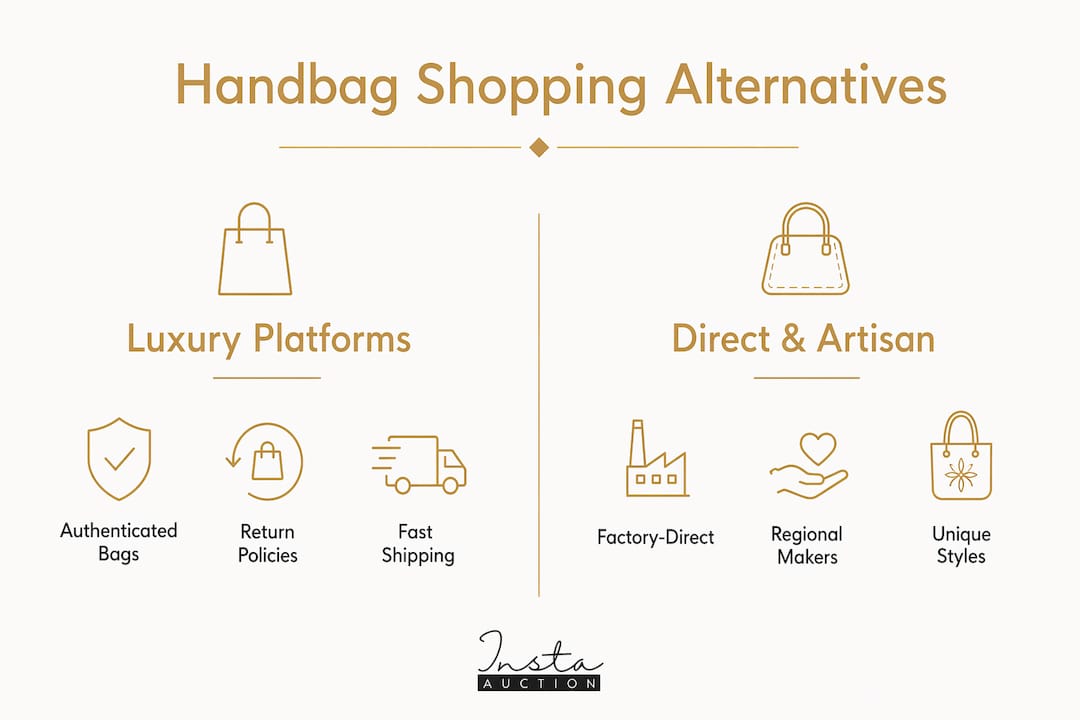
If you’re looking for fashion-forward bags beyond Fashion8.ae, the best alternatives fall into five clear categories: large online marketplaces, factory-direct stores, region-based artisan hubs, multi-brand fashion retailers, and secondhand resale platforms. Each one serves a different kind of shopper, from someone hunting a $50 trendy tote to a buyer chasing a verified luxury piece at half the retail price. What they share is the ability to ship to U.S. addresses with reasonable return policies and some form of authenticity assurance.
Here’s a quick orientation by category:
- Large marketplaces: Broad selection across price points, buyer reviews, seller ratings, and easy filtering by style or brand. Best for variety and price comparison.
- Factory-direct stores: Fewer intermediaries mean better pricing on genuine pieces. Strong on material quality and craftsmanship detail.
- Region-based maker hubs: Artisan-made bags rooted in local traditions. Ideal for shoppers who want something rare and handcrafted.
- Multi-brand retailers: Curated collections vetted by in-house stylists. Great for trend-forward shoppers who want confidence built in.
- Resale and consignment platforms: Pre-owned bags, often with professional authentication certificates, at prices well below retail. Many offer buyer protection and free returns.
U.S. buyers should confirm that any alternative site ships domestically, lists a clear return window (30 days is the standard to expect), and publishes an authentication policy before placing an order.
What are the best Fashion8.ae alternatives for handbag shopping?
Large online marketplaces are the most practical starting point for shoppers moving away from Fashion8.ae. They carry thousands of styles across every price tier, from canvas crossbodies under $40 to designer shoulder bags in the four-figure range, and their infrastructure for buyer protection is well-established.
The real advantage of a large marketplace is the layered trust system. Seller ratings, verified purchase reviews, and platform-level buyer guarantees work together in a way that a single-brand site simply cannot replicate. You can filter by bag shape, material, color, and even strap style, which makes finding a specific look much faster than browsing a curated boutique.
- Selection depth: Thousands of listings across styles, brands, and price points, updated daily.
- Buyer reviews: Real purchase feedback on stitching quality, color accuracy, and sizing helps you avoid surprises.
- Seller ratings: Platforms that display seller history and dispute rates let you screen out unreliable vendors before you buy.
- Return policies: Most major marketplaces offer 30-day returns on unworn items, and some extend that to 60 days during sale periods.
- Shipping to the U.S.: Standard domestic shipping typically runs 3–7 business days; expedited options are usually available for an added fee.
One thing to watch: marketplace listings for “designer” bags vary wildly in authenticity. Always check whether the platform has a dedicated authentication program for luxury items before purchasing anything above $200.
Pro Tip: Filter marketplace search results by “verified seller” or “authenticated” tags when shopping for any bag priced above $150. These filters exist on most major platforms and cut through the noise fast.
Why do factory-direct stores offer better value for quality bags?
Factory-direct stores cut out the wholesale and retail markup layers, which is why the same calfskin tote that retails at a department store for $380 might list for $180 on a direct-to-consumer site. The savings are real, but the more important benefit is transparency. These stores typically publish detailed product specs: the exact leather grade, hardware finish, lining material, and construction method.
Quality indicators to look for on any factory-direct listing:
- Stitching: Even, tight, and consistent across seams. Loose or uneven stitching is the fastest sign of poor construction.
- Hardware: Solid brass or zinc alloy fittings feel heavy and don’t scratch easily. Lightweight, hollow hardware is a red flag.
- Material description: Genuine leather listings should specify the hide type (full-grain, top-grain, corrected-grain). “PU leather” or “vegan leather” is synthetic, which is fine as long as it’s labeled honestly.
- Lining: Fabric-lined interiors with clean seam finishing indicate attention to detail that carries through the whole bag.
- Brand details: Embossed logos, serial numbers, and branded hardware should be sharp and centered, not blurry or off-axis.
The tradeoff with factory-direct is narrower style selection. Most of these stores carry a focused catalog rather than hundreds of options, so if you need a specific silhouette in three colorways, a marketplace will serve you better.
How to evaluate a factory-direct site before buying:
- Check that the product page lists specific materials, not just “high-quality leather.”
- Look for a physical address or verifiable business registration, not just a contact form.
- Confirm the return policy covers at least 14 days for unworn items.
- Search the brand name plus “review” on an independent platform before your first order.
- Verify that customer service responds within 24–48 hours by sending a pre-purchase question.
Factory-direct stores rarely offer the authentication certificates that luxury resale platforms provide, so they’re best suited for fashion-forward bags in the $50–$300 range rather than high-end designer pieces.
Where do region-based maker hubs fit for U.S. shoppers?
Some of the most distinctive handbags available online come from geographically specific artisan communities, and U.S. shoppers have more access to them than ever. Italy’s leather goods districts (Florence and the Veneto region in particular), Morocco’s medina workshops, and Colombia’s Bogotá leather ateliers each produce bags with construction methods and materials that mass-market factories don’t replicate.
What makes regional bags worth the extra effort is specificity. A Florentine vegetable-tanned leather bag develops a patina over years of use that factory-processed leather never achieves. Moroccan woven bags use traditional techniques that are genuinely difficult to source anywhere else. These aren’t just aesthetic differences; they reflect material choices and hand-finishing steps that take more time and skill.
- Authenticity markers: Regional makers often include certificates of origin, maker stamps, or hand-signed tags. Ask for these before purchasing.
- Rarity: Limited production runs mean you’re unlikely to see the same bag on someone else. That’s a genuine draw for shoppers who treat bags as personal style statements.
- Verification: Look for makers who sell through established artisan marketplaces or have verifiable social media presence with workshop photos and customer testimonials.
- International shipping: Expect 10–21 business days for delivery from artisan hubs in Europe, North Africa, or South America. Customs duties on leather goods entering the U.S. vary by country of origin, so factor that into your total cost.
- Returns: Many small regional makers don’t accept returns on custom or made-to-order pieces. Confirm the policy before you commit.
The price range for regional artisan bags is wide, from $80 for a simple woven clutch to $600 or more for a hand-stitched full-grain leather tote. The value is in the craft, not the brand name.
How do multi-brand fashion retailers build shopper confidence?
Multi-brand retailers solve a specific problem: you want trend-forward bags without spending hours vetting individual sellers. These retailers employ buyers or stylists who select inventory based on current fashion direction, which means the catalog reflects what’s actually relevant for the season rather than what a single brand happens to produce.
The confidence factor comes from the curation layer. Every bag in a multi-brand retailer’s inventory has passed an internal quality review before it’s listed. That’s different from a marketplace, where individual sellers set their own standards.
- Trend alignment: Buyers at multi-brand retailers track runway shows, street style, and social media to stock what’s actually selling, not what’s left over.
- Quality control: Products are inspected before listing, so the description matches the actual item.
- Brand diversity: A single retailer might carry 20–40 bag brands, giving you real comparison shopping in one place.
- Return policies: Most multi-brand fashion retailers offer 30-day returns with prepaid labels, a standard that smaller boutiques rarely match.
- Customer service: Dedicated support teams familiar with the full catalog can answer specific questions about materials, sizing, and availability.
Shipping from multi-brand retailers to U.S. addresses is typically 3–5 business days for domestic stock. International multi-brand retailers often have U.S. fulfillment centers now, which cuts delivery time considerably.
Are secondhand platforms a smart choice for fashion-forward bags?
Pre-owned handbag platforms have grown into a serious market, and for fashion-forward shoppers, they offer something no new-goods retailer can: access to discontinued styles, limited-edition releases, and luxury pieces at prices that reflect actual wear rather than brand markup. A bag that retailed for $1,200 two years ago might list on a resale platform for $650 in excellent condition.
Authentication is the central issue on any resale platform, and the better ones have invested heavily in solving it. Professional appraisers physically inspect high-value bags before listing, and some platforms issue authentication certificates that include verifiable documentation. That’s the standard to look for.
- Consignment models: The platform holds the item, authenticates it, and ships directly to the buyer. Lower risk than peer-to-peer.
- Peer-to-peer models: Sellers list their own items; buyer protection depends entirely on platform policy. Read the guarantee terms carefully.
- Authentication methods: Reputable platforms use trained authenticators, sometimes supported by technology like Entrupy, which issues certificates with unique, independently verifiable links backed by financial guarantees.
- Buyer protection: Look for platforms that hold payment until the buyer confirms receipt and condition, not platforms that release funds immediately at purchase.
- Seller reputation: Check the seller’s transaction history, response rate, and any dispute record before buying from an individual lister.
Shipping on resale platforms varies. Consignment-model platforms typically ship within 2–5 business days of purchase. Peer-to-peer platforms depend on the individual seller, so check their listed handling time.
What’s your smart shopping checklist for fashion-forward bags?
The difference between a bag that looks expensive and one that actually holds up comes down to a handful of physical details that are easy to check once you know what to look for. Price alone tells you almost nothing.
Quality markers to inspect (or request photos of):
- Hardware weight: Zippers, clasps, and D-rings should feel solid. Hollow or lightweight hardware wears out fast and looks cheap within months.
- Stitching consistency: Run your eye along every seam. Stitches should be uniform in size and spacing, with no loose threads or skipped stitches at stress points like handles and corners.
- Material authenticity: Genuine leather has a slight grain variation and a faint natural smell. Perfectly uniform texture with a plastic smell is synthetic, regardless of how the listing describes it.
- Logo and branding details: On any branded bag, logos should be centered, sharp, and correctly spelled. Misaligned or slightly blurry logos are a counterfeit signal.
- Interior finishing: A quality bag has clean seam finishing inside, not raw edges or glue residue. The lining should lie flat without bubbling.
Pricing strategy tips:
- Compare the same style across at least three platforms before buying. Price gaps of 30% or more on identical items usually indicate a quality difference or a counterfeit risk.
- End-of-season sales on multi-brand retailers typically run in january and july. Those are the best windows for buying current-season styles at reduced prices.
- Resale platforms often price by condition grade (excellent, very good, good). “Very good” condition bags typically show only light wear and represent the best value-to-condition ratio.
Pro Tip: Before buying any bag above $300, request a photo of the interior serial number or date code and cross-reference it against the brand’s known format. Most luxury brands publish this information publicly, and a mismatched code is a definitive red flag.
Why do financial guarantees and authentication certificates matter?
Authentication certificates are not just paperwork. For any bag priced above $200, a certificate is the difference between a purchase you can defend and one you’re guessing on. The best certificates are independently verifiable, meaning you can check the certificate’s unique link on the authenticator’s own servers, not just on the seller’s website.
Entrupy is the industry-recognized standard for third-party handbag authentication. Fashion8.ae uses Entrupy’s authentication system, and each certificate it issues carries a unique URL hosted on Entrupy’s servers, backed by a financial guarantee against counterfeit losses. That structure, an independent link plus a financial backstop, is what you should expect from any platform claiming to authenticate luxury bags.
- What a strong certificate includes: A unique, independently verifiable link; the authenticator’s name and credentials; the item’s description and condition; and a financial guarantee clause.
- What to avoid: Certificates that link back to the seller’s own website, certificates with no named authenticator, and “authenticity guaranteed” claims with no documentation behind them.
- How to verify: Enter the certificate link directly into your browser and confirm it resolves to the authenticator’s server, not a redirect. Entrupy’s certificates, for example, resolve to Entrupy’s own domain.
- Financial guarantees: These protect you if an authenticated item later proves counterfeit. The guarantee should specify the coverage amount and the claim process.
- Why it matters more at higher prices: A $90 canvas tote carries limited counterfeit risk. A $900 leather bag from a luxury brand is a target for sophisticated fakes, and a verified certificate is the only reliable protection.
For luxury goods authentication, the standard has moved toward technology-assisted verification combined with human expert review. Either alone is less reliable than both together.
Insta-auction: a different route for pre-loved luxury bags
If the alternatives above feel like a lot of platforms to vet individually, Insta-auction offers a consolidated approach worth knowing about. Rather than browsing listings and hoping the seller’s authentication claim holds up, Insta-auction puts trained appraisers between the item and the buyer, every time.
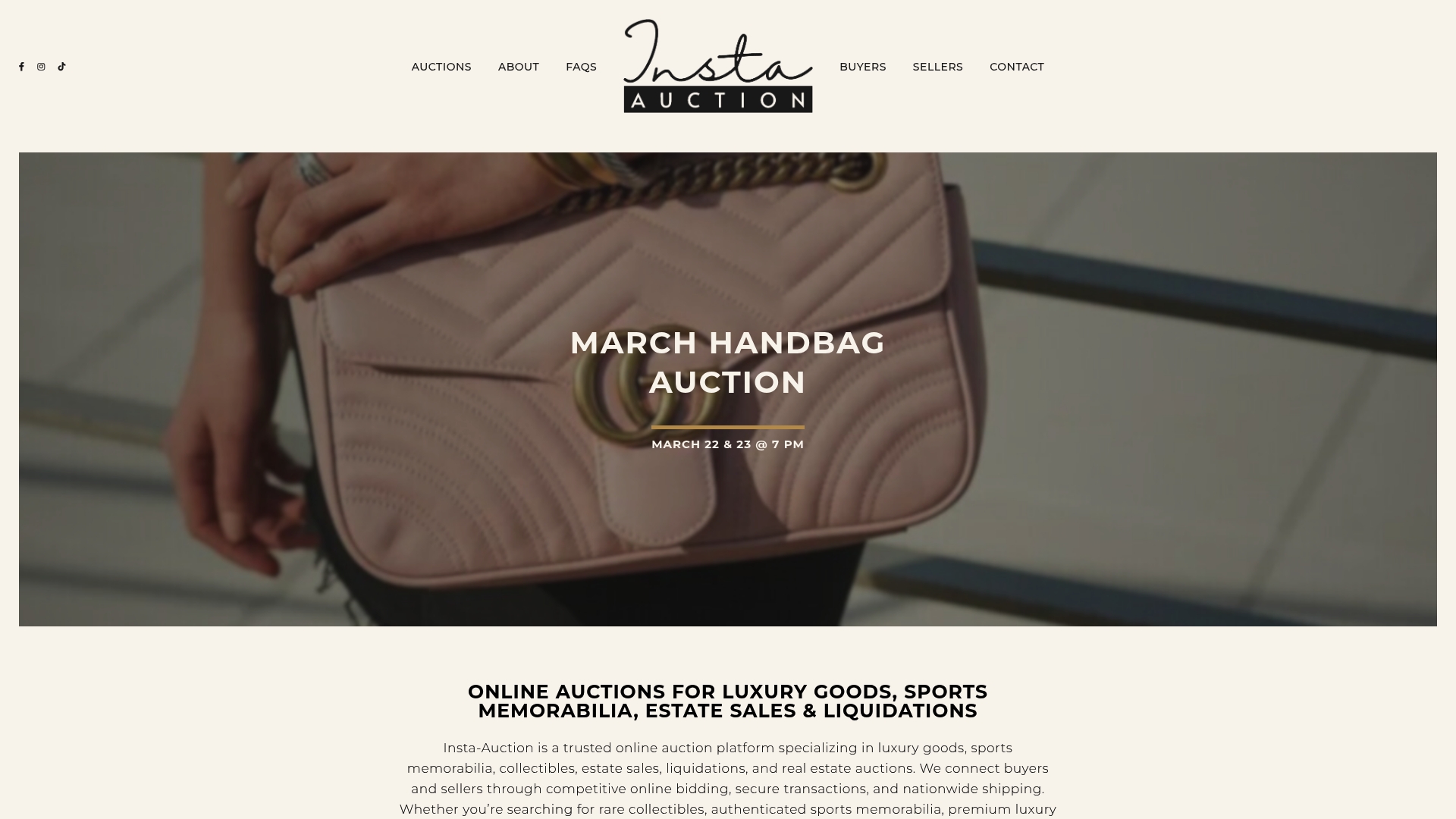
The platform specializes in pre-loved luxury goods, including authenticated handbags, and its appraisal process covers condition, provenance, and market value before any item goes live. Sellers get competitive prices because Insta-auction markets items across multiple digital channels simultaneously, not just one storefront. Buyers get auction-ready luxury items with documented authentication and a transparent bidding process. Insta-auction also donates a portion of every sale to selected charities, which adds a community dimension that most resale platforms don’t offer. For shoppers who want verified pre-owned luxury bags without the platform-vetting work, it’s a direct path to both confidence and value.
Key Takeaways
The strongest Fashion8.ae alternatives combine authentication documentation, clear return policies, and U.S.-friendly shipping, with the right platform depending on your budget and bag type.
| Point | Details |
|---|---|
| Authentication is non-negotiable above $200 | Look for independently verifiable certificates with financial guarantees, not just seller claims. |
| Entrupy sets the certificate standard | Entrupy certificates carry unique links hosted on Entrupy’s servers, backed by a financial guarantee against counterfeit losses. |
| Platform type matches shopping goal | Marketplaces suit variety seekers; factory-direct suits quality-focused buyers; resale suits luxury shoppers on a budget. |
| Quality markers are physical, not verbal | Check hardware weight, stitching consistency, material grain, and interior finishing before buying. |
| Insta-auction for pre-loved luxury | Insta-auction provides expert appraisal and authenticated pre-owned luxury bags through a transparent auction process. |
FAQ
What makes a Fashion8.ae alternative trustworthy for U.S. buyers?
A trustworthy alternative ships to U.S. addresses, offers at least a 30-day return window, and publishes a clear authentication policy. For luxury bags, look for platforms using third-party authentication services like Entrupy, which issue independently verifiable certificates backed by financial guarantees.
How do I verify an authentication certificate is real?
Enter the certificate’s unique link directly into your browser and confirm it resolves to the authenticator’s own server. Entrupy certificates, for example, resolve to Entrupy’s domain, not the seller’s site. Any certificate that redirects back to the seller’s website is not independently verified.
Are resale platforms safe for buying designer handbags?
Consignment-model resale platforms are generally safe because the platform physically inspects and authenticates items before shipping. Peer-to-peer platforms carry more risk; always check the platform’s buyer protection policy and the seller’s transaction history before purchasing.
What price range should I expect for fashion-forward bags in 2026?
Prices vary widely by platform type: factory-direct fashion bags typically run $50–$300, regional artisan bags range from $80 to $600 or more, and authenticated pre-owned luxury bags on resale platforms can start around $300 and reach well into four figures depending on brand and condition.
How does Insta-auction differ from a standard resale platform?
Insta-auction uses trained appraisers to evaluate every item before it goes live, markets pieces across multiple digital channels to drive competitive bids, and donates a portion of each sale to charity. That combination of expert appraisal, competitive pricing, and social responsibility sets it apart from standard peer-to-peer resale models.