

The most valuable types of household items worth auctioning are antiques, fine art, jewelry, collectibles, and luxury goods with active buyer demand. Value depends on four factors: condition, rarity, provenance, and market interest. Professional appraisal is recommended for any item you suspect exceeds $1,000, and certified appraisal is strongly advised above $5,000 to avoid leaving money on the table. Knowing which categories attract serious bidders is the first step toward a strong sale.
1. Types of household items worth auctioning
The categories below consistently attract competitive bidding and achieve notable final prices. Each one has a proven track record at both regional auction houses and online platforms.
- Antique furniture. Solid wood pieces made before 1950, especially those with original finish, command top prices at auction. Victorian sideboards, Arts and Crafts bookcases, and Federal period tables all draw serious collectors.
- Fine art. Original paintings, signed lithographs, and artist-proofed prints hold strong resale value. Unsigned or mass-produced prints rarely perform well unless tied to a notable artist or movement.
- Jewelry and watches. Gold jewelry pieces can be worth $5,000 to $20,000 individually. Sterling silver sets regularly bring $800 to $5,000 or more. Designer signatures and hallmarks drive premiums.
- Vintage collectible toys and comics. Golden Age and Silver Age comic books are among the most reliably valuable household collectibles. Sealed vintage toys can be worth 5 to 50 times more than loose equivalents.
- Silver flatware and serving pieces. Hallmarked sterling silver flatware sets attract both collectors and buyers seeking precious metal content. Complete sets with original cases sell for significantly more.
- Luxury branded goods. Designer handbags, art glass by named studios, and rare branded collectibles all perform well when condition is strong. Buyers at this level expect authentication documentation.
Matching items to the right auction-ready category matters as much as the item itself. A Victorian writing desk consigned to a general household sale will rarely reach its ceiling price.
2. How condition, completeness, and provenance affect value
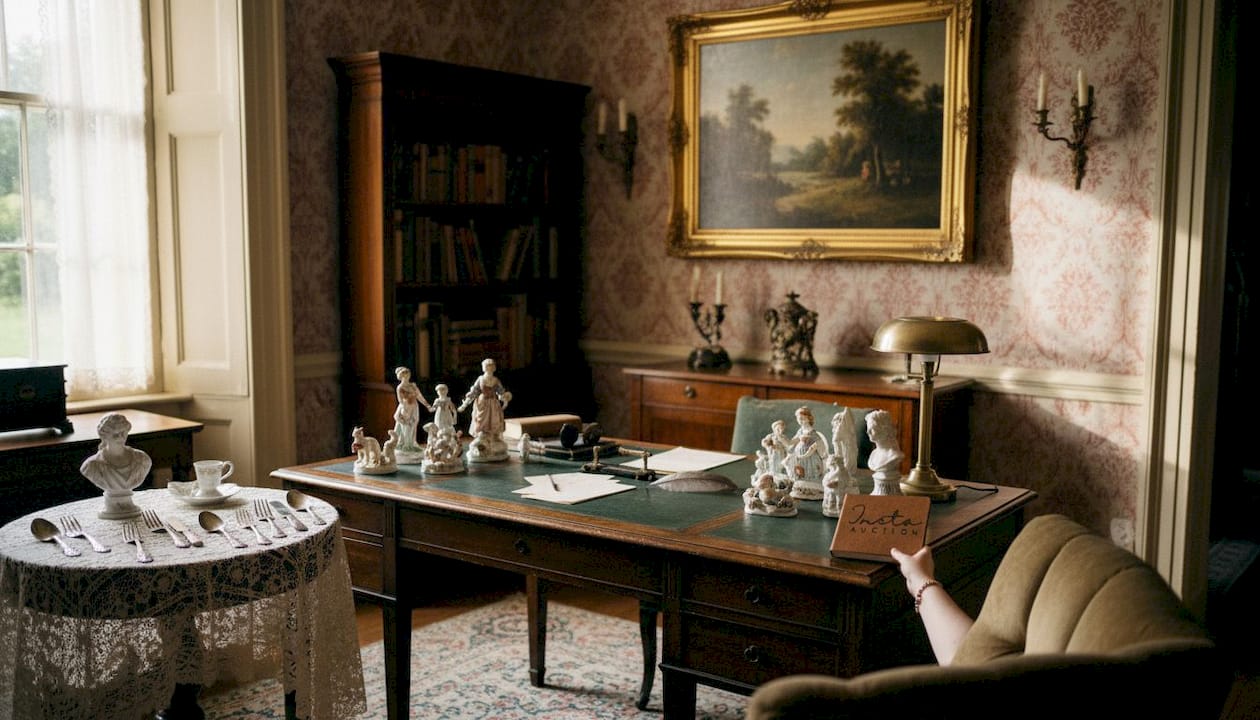
Condition is the single biggest variable in auction pricing. Missing parts reduce value by 30% to 70%, while mint or near-mint condition commands significant premiums over comparable items in lesser grades.
Grading standards exist across most collectible categories. PSA grades trading cards on a 1–10 scale, and a PSA 10 card can command a 300% to 500% premium over the same card graded PSA 8. CGC applies a similar numeric scale to comic books. Coins follow the Sheldon scale, where grade differences multiply prices by 10 to 20 times between the lowest and highest grades. These are not minor differences. They are the difference between a $50 sale and a $5,000 sale.
Completeness matters beyond grading. A Lego set with all original pieces and its box sells for multiples of a loose, incomplete version. The same logic applies to silverware sets, chess sets, and vintage board games.
Provenance is the ownership and exhibition history of an item. Documented provenance multiplies value substantially, especially when tied to a notable person or historical event. A letter of authenticity, a bill of sale from a known dealer, or a photograph of the item in a notable collection all build buyer confidence and justify higher bids.
Pro Tip: Before cleaning any antique or collectible, consult a specialist. Improper cleaning removes original patina and finish, which are often the very features that authenticate age and drive value.
Reproductions are a real risk in this market. Expertise is needed to authenticate originals, particularly with furniture, art, and ceramics. When in doubt, pay for a professional opinion before consigning.
3. Niche and specialized household items that surprise sellers
Some of the best household items for resale are not the obvious ones. These categories are frequently overlooked during estate clearances, yet they attract dedicated collector communities willing to pay well.
- Military memorabilia. WWII medals, dress uniforms, swords, and helmets carry strong niche demand among military history collectors. Provenance linking an item to a specific campaign or unit adds considerable value.
- Vintage kitchenware. Griswold cast iron skillets, early Pyrex patterns in rare colorways, and Hall China teapots have passionate collector bases. A single Griswold No. 14 skillet in excellent condition regularly fetches hundreds of dollars.
- Coins and currency. Pre-1965 American silver coins carry intrinsic metal value plus collector premiums. Coins from notable mint years or with low mintage figures attract specialist bidders.
- Signed books and rare first editions. A signed first edition of a major literary work can be worth multiples of its unsigned counterpart. Condition of the dust jacket is critical for book collectors.
- Vintage tools and musical instruments. Pre-war hand planes by Stanley or Millers Falls, and instruments with maker marks from respected luthiers, draw strong interest. A 1960s Gibson or Martin guitar in original condition is a serious auction item.
Scarcity alone does not drive auction prices. Active collector demand is what converts rarity into realized value. Before consigning a niche item, verify that an active buyer community exists by checking sold listings on eBay or specialist auction archives.
4. Practical steps to prepare household items for auction
Preparation directly affects your final sale price. Sellers who research, document, and present items well consistently outperform those who consign without preparation.
Research comparable sales. Search completed and sold listings on eBay for identical or near-identical items. Auction archive databases provide historical hammer prices. Online sold listings give medium to high accuracy for items under $500. For anything above $1,000, professional evaluation is the right call.
Hire a certified appraiser when warranted. Professional appraisal costs $100 to $200 per hour. For items you believe exceed $1,000 in value, that fee pays for itself. Appraisers certified by the American Society of Appraisers or the Appraisers Association of America carry recognized credentials.
Document provenance thoroughly. Gather receipts, prior appraisals, photographs, and any correspondence that establishes the item’s history. Scan and organize these before consignment. Buyers at higher price points expect documentation.
Photograph items carefully. Use natural light and a neutral background. Capture all angles, any maker’s marks, hallmarks, or signatures, and any flaws. Honest, detailed photography builds bidder confidence and reduces post-sale disputes.
Match items to the right auction house. A specialist auction house focused on militaria will outperform a general estate sale for WWII medals. Selecting specialized auction houses improves outcomes consistently. Insta-auction’s expert team appraises and markets items across targeted digital channels, which means your item reaches the buyers most likely to bid competitively.
Understand commission rates and timelines. Auctions typically take 30 to 90 days to complete. Commission rates range from 20% to 50% of the final sale price. Factor these into your reserve price calculations.
Pro Tip: Buyer premiums are added on top of the hammer price and can range from 15% to 25%. When you research past sale prices, adjust for premiums to get an accurate picture of what the seller actually received.
Also note that buyer premiums distort raw comparables. A hammer price of $1,000 with a 20% buyer premium means the buyer paid $1,200. The seller’s net, after commission, may be closer to $700. Understanding this math prevents unrealistic expectations.
Key Takeaways
The most valuable household items at auction combine proven collector demand with strong condition, complete provenance, and placement in the right sale category.
| Point | Details |
|---|---|
| Condition drives price | Missing parts reduce value by 30%–70%; mint condition commands the highest premiums. |
| Provenance multiplies bids | Documented ownership history builds buyer confidence and justifies higher final prices. |
| Niche items need specialist sales | Military memorabilia, vintage kitchenware, and rare books perform best in targeted auctions. |
| Research before consigning | Check eBay sold listings for items under $500; hire a certified appraiser above $1,000. |
| Commission and timing matter | Auction timelines run 30–90 days; commissions range from 20%–50% of the final sale price. |
What I’ve learned from watching household auctions go wrong
The most common mistake I see is sellers choosing an auction house based on convenience rather than fit. A general household clearance sale is the wrong venue for a signed first edition or a Griswold cast iron collection. The buyers simply are not in the room. An auctioneer’s genuine enthusiasm for your specific items is one of the clearest signals that their buyer base is the right one.
The second mistake is timing. Markets for specific categories move. Mid-century modern furniture peaked and softened. Pyrex collectibles surged during the pandemic and have since stabilized. Selling into a hot market versus a cooling one can mean a 40% difference in realized price. Watch auction results in your category for three to six months before committing to a sale date.
The third mistake is over-cleaning. I have watched sellers strip the original patina from a piece of Arts and Crafts furniture and cut its value in half before it ever reached the block. Condition means original condition, not polished condition. When you are unsure, do nothing.
The practical advice I give every seller is this: spend $200 on a certified appraiser before you spend a single hour cleaning, photographing, or consigning. That investment will either confirm your instincts or save you from a costly mistake. Either outcome is worth the fee.
— Admin
Selling household valuables with Insta-auction
Knowing what you have is only half the work. Getting it in front of the right buyers is where the real return is made.
Insta-auction specializes in pre-loved luxury items and collectibles, with trained experts who appraise and market each piece across targeted digital channels. Whether you are managing an estate or clearing a single high-value item, the platform connects your goods with buyers who are actively looking for exactly what you have. Insta-auction also donates a portion of every sale to selected charities, so your sale does good beyond the final price. Start with the luxury goods auction listings or review the auction-ready seller examples to see what categories are performing well right now.
FAQ
What household items sell best at auction?
Antique furniture, fine art, jewelry, signed collectibles, and luxury branded goods consistently achieve the strongest results. Items with documented provenance and strong condition grades outperform comparable pieces without them.
How do I know if a household item is worth auctioning?
Check completed sold listings on eBay or specialist auction archives for comparable items. For anything you believe exceeds $1,000 in value, a certified appraiser will give you the most accurate assessment.
Does condition really affect auction price that much?
Condition is the primary pricing variable for most collectible categories. Missing parts alone can reduce value by 30% to 70%, and a top-grade coin or trading card can sell for 10 to 20 times more than the same item in poor condition.
What is provenance and why does it matter?
Provenance is the documented history of an item’s ownership and exhibition record. Strong provenance, especially links to notable persons or events, builds buyer confidence and can multiply the final hammer price substantially.
How long does it take to sell through auction?
Most auctions take 30 to 90 days from consignment to final sale. Commission rates typically range from 20% to 50% of the hammer price, so factor both the timeline and the fee into your pricing expectations before you consign.