

Auction expert appraisal, the industry term for the formal process of identifying and documenting an item’s true market worth, is the single most powerful tool for maximizing returns on luxury goods. The role of auction expert identifying hidden value goes far beyond setting a price. It involves tracing provenance, reading physical condition, interpreting market signals, and managing legal documentation. Certified personal property appraisers, including those credentialed through the Certified Appraisers Guild of America, apply these skills to uncover what a casual seller or buyer would never see. For collectors and families navigating estate sales or luxury auctions, understanding this role is the difference between leaving money on the table and walking away with a result that reflects true worth.
How auction experts identify hidden value through provenance, condition, and rarity
The role of auction specialists in identifying hidden value starts with three core factors: provenance, physical condition, and rarity. Each one can shift an item’s price dramatically, and missing any one of them is a costly mistake.
Provenance is the documented history of an item’s ownership and origin. A piece of furniture with a verifiable connection to a notable estate or historical figure commands far more interest than an identical piece without that paper trail. Auction experts spend considerable time tracing ownership records, exhibition histories, and original receipts. That research directly increases buyer confidence and, in turn, final hammer prices.

Physical condition is more nuanced than it appears. Signs of wear and patina can actually confirm authenticity on antiques, while structural defects like chips, cracks, or replaced components significantly reduce value. Auction expert Maurizio Quacquaro notes that rare discoveries, such as a hidden signature or an unknown attribution, can alter both the historical and market worth of an item overnight. That kind of find is not luck. It is the result of trained examination.
Rarity and market desirability complete the picture. An item may be old and well-preserved, but if the market has no appetite for it right now, the price reflects that reality. Experts track current collector trends, recent comparable sales, and category-specific demand cycles to time listings and set estimates that attract serious bidders.
- Verify provenance with original receipts, exhibition records, or auction house archives
- Examine patina and wear patterns as authenticity markers, not just flaws
- Check for hidden signatures, maker’s marks, or labels under frames and on undersides
- Research recent comparable sales in the same category before accepting any estimate
- Look for items described as “fresh to market,” as they attract stronger bidder interest
Pro Tip: Never rely solely on photographs when assessing condition. Personal inspection during preview days or hiring a specialist to attend on your behalf is the only reliable way to confirm that an item matches its catalog description.
How to decode auction house signals and spot true value
Auction catalogs are not neutral documents. They are carefully constructed communications that reveal how much confidence an auction house has in a given lot. Learning to read them like a dealer is one of the most underused auction strategies for experts and informed collectors alike.
The estimate range is the clearest signal. A tight estimate spread — for example, $1.0 million to $1.2 million — signals strong internal confidence. A wide spread, such as $800,000 to $1.5 million, tells you the house is testing the market rather than asserting a firm view. That distinction matters enormously when you are deciding how aggressively to bid or whether to consign.
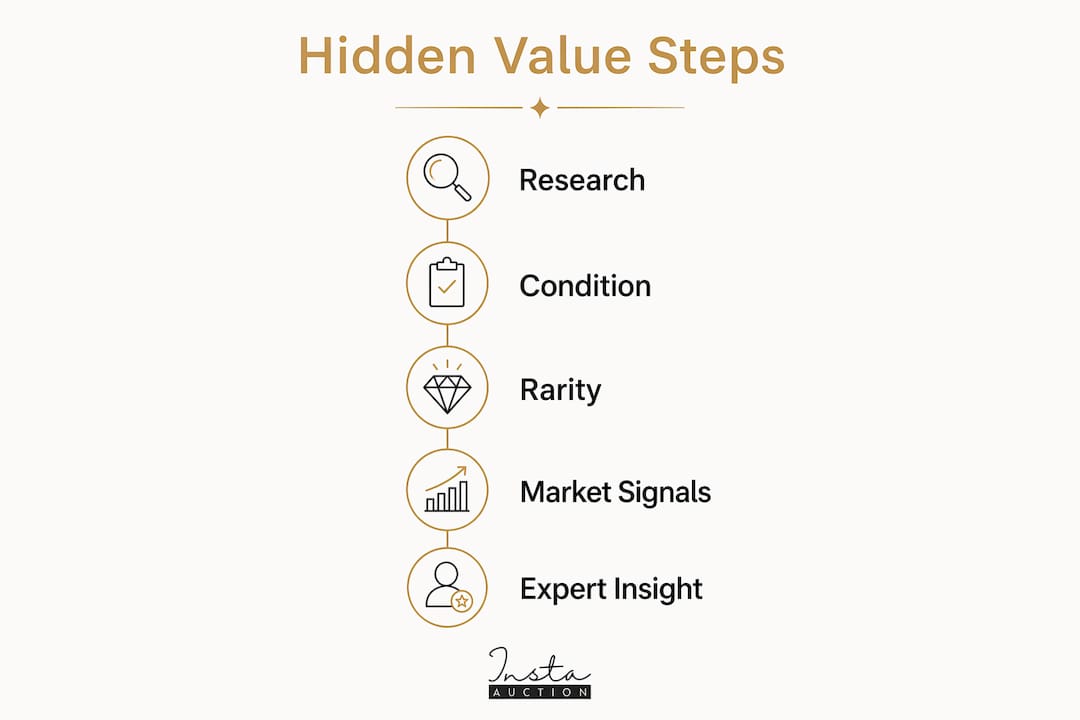
Lot placement carries meaning too. High-profile lots typically anchor the middle of a sale, where bidder energy peaks. Items placed at the very beginning or end of a long sale often receive less competitive bidding. Experts use this knowledge to find undervalued lots that deserve more attention than their position suggests.
Guarantee symbols in catalogs indicate that a third party has guaranteed a minimum price for the lot. This protects the seller but can also signal that the house needed external support to bring the item to market. That context shapes how a knowledgeable bidder interprets the estimate.
| Signal | What it means |
|---|---|
| Tight estimate spread | High internal confidence; expect competitive bidding |
| Wide estimate spread | Market still being tested; outcome less predictable |
| Lot placed mid-sale | Prime placement; house expects strong results |
| Guarantee symbol present | Third-party financial backing; seller protection in place |
| “Fresh to market” notation | Item not recently sold; attracts stronger collector interest |
Pro Tip: Read the catalog notes for hedging language. Phrases like “appears original” or “not examined outside holder” are warning signs for buyers and should prompt a request for a condition report before bidding.
Common pitfalls and how expert knowledge prevents overpayment
Auction psychology is a well-documented trap. The competitive atmosphere, the countdown clock, and the presence of other bidders all push prices above rational limits. Identifying auction value requires separating what an item is worth from what the room wants to pay for it in the moment.
The most common financial mistake is ignoring the buyer’s premium. The buyer’s premium adds 20–28% above the hammer price, and that figure does not include applicable taxes or shipping. A $10,000 hammer price can easily become a $13,000 or $14,000 final cost. Experts calculate the all-in maximum before the auction starts and treat that number as a hard ceiling.
- Calculate your all-in maximum bid before the auction opens, including buyer’s premium and taxes
- Write that number down and commit to it regardless of what happens in the room
- Research at least three comparable sales in the same category to anchor your valuation
- Request condition reports for any lot you are seriously considering
- Use AI-powered appraisal tools for a quick initial range, then confirm with a specialist for high-value items
AI-powered tools analyze photos for style, period, and condition to produce a useful value range. They work well as a first filter. For unique or high-value pieces, a certified appraiser’s assessment is the necessary final step.
Veteran advisor Patti Wong has highlighted that post-COVID auction market recalibration has made buyers more sophisticated and more demanding about provenance accuracy. High buyer premiums are also pushing some collectors toward private sales. That shift means auction experts who deliver precise valuations and transparent documentation hold a clear advantage in retaining client trust.
Pro Tip: Detach emotional attachment from financial value before you enter any auction. Emotional bidding is the single most reliable way to overpay, and no expert can protect you from it if you have not made that decision in advance.
The auction expert’s role in estate and probate auctions
Estate and probate auctions carry legal and financial stakes that go well beyond a typical sale. Families and executors face tax filings, court documentation requirements, and the need to demonstrate that assets were sold at fair market value. Auction experts serve as both process managers and market-makers in these situations.
Certified personal property appraisers work within organizations like the Certified Appraisers Guild of America to produce valuations that meet legal and tax compliance standards. Their documentation is designed to withstand scrutiny from attorneys, courts, and tax authorities. That level of rigor is not available from a general online listing or a casual appraisal.
Auction experts also collaborate directly with attorneys and personal representatives to coordinate timelines, classify assets correctly, and produce itemized settlement statements. For families managing grief alongside financial responsibility, that coordination removes an enormous burden. The online estate auction process becomes far more manageable when a qualified expert handles the documentation and market-facing work.
- Confirm the appraiser holds recognized credentials, such as those from the Certified Appraisers Guild of America
- Request itemized settlement documentation covering every lot sold
- Verify that reserve prices are set based on current market data, not outdated appraisals
- Coordinate with your attorney early to align auction timelines with probate deadlines
- Ask for clear buyer invoices and seller settlement statements for every transaction
Transparency in documentation benefits both sides of the transaction. Clear settlement statements and buyer invoices create a defensible record that protects families from disputes and supports accurate tax filings. For families dealing with complex estates, that paper trail is as valuable as the sale proceeds themselves.
Key Takeaways
The most effective approach to identifying hidden value at auction combines provenance research, condition assessment, catalog signal analysis, and disciplined cost calculation before a single bid is placed.
| Point | Details |
|---|---|
| Provenance drives price | Documented ownership history increases buyer confidence and final hammer prices. |
| Condition requires in-person review | Photos miss restoration work and structural damage; always inspect or hire a specialist. |
| Catalog signals reveal confidence | Tight estimate spreads indicate strong internal conviction; wide spreads signal market testing. |
| Buyer’s premium changes the math | Add 20–28% above the hammer price to calculate your true all-in cost before bidding. |
| Estate auctions need certified experts | Credentialed appraisers produce legally defensible documentation for probate and tax filings. |
What I have learned about auction value that most guides skip
The auction world rewards preparation more than instinct, and that truth took me longer to fully accept than I would like to admit. Most collectors walk into a sale with a rough sense of what they want and a vague ceiling in mind. That approach works until it doesn’t, and when it fails, it fails expensively.
The insight that changed how I think about valuing hidden assets is this: value is not a fixed number. It is a position on a curve shaped by rarity, condition, timing, and the specific group of people in the room or online that day. A piece of Art Deco jewelry that sells for a modest sum in a general estate sale can bring three times that amount in a specialist collector sale six months later. The item did not change. The audience did.
What I find most underappreciated is the catalog reading skill. Collectors who learn to interpret estimate spreads, lot placement, and guarantee symbols gain a genuine edge. They know when the house is confident and when it is guessing. That knowledge shapes bidding strategy in ways that no amount of enthusiasm can replicate. The types of collectibles that consistently surprise on the upside are almost always the ones where a knowledgeable bidder spotted a signal the room missed.
My honest advice: spend as much time studying the catalog as you spend researching the item itself. The catalog tells you what the experts think. The item tells you what the market might reward. Together, they give you the full picture.
— Admin
Insta-auction’s expert support for collectors and families
Collectors and families who want to move from guesswork to confident results have a direct path through Insta-auction’s team of trained appraisers and auction specialists.

Insta-auction focuses on pre-loved luxury goods auctions and collectibles, with experts who appraise items, prepare catalog-quality listings, and market them across digital channels to attract serious bidders. For families managing estate sales, Insta-auction provides the settlement documentation and compliance support that probate situations demand. The platform also donates a portion of every sale to selected charities, so your auction contributes to something beyond the final price. Whether you are consigning a single piece or managing a full estate, submit your consignment to connect with an expert who can identify what your items are truly worth.
FAQ
What does an auction expert actually do?
An auction expert appraises items, traces provenance, sets defensible estimates, and manages the sale process from cataloging through settlement documentation. Their role extends to legal compliance support in estate and probate situations.
How do auction experts find hidden value in luxury goods?
Experts examine physical condition for authenticity markers like patina, search for hidden signatures or rare attributions, and research provenance records to uncover factors that raise an item’s market worth beyond its surface appearance.
What is the buyer’s premium and why does it matter?
The buyer’s premium is an additional fee charged on top of the hammer price, typically ranging from 20–28%. Factoring it into your maximum bid before the auction starts prevents overpayment.
Why is provenance so important in luxury auctions?
Provenance provides a verifiable ownership history that increases buyer confidence and supports higher bids. Items with documented connections to notable collections or historical figures consistently attract stronger market interest.
When should a family hire an auction expert for an estate sale?
Families should engage a certified appraiser as early as possible in the probate process. Credentialed experts produce legally defensible valuations and settlement documentation that satisfy tax authorities and court requirements.