

A nonprofit liquidation auction is defined as a structured, legally governed process in which a nonprofit organization sells its assets to the highest bidder to convert property into cash or transfer it according to fiduciary and charitable obligations. Understanding how nonprofit liquidation auction works matters because the process involves IRS oversight, state Attorney General notification, and strict rules about where proceeds can go. The nonprofit auction process covers four core phases: preparation, marketing, bidding, and closeout. Each phase carries legal weight, and skipping steps creates real liability for board members and charity representatives.
How does a nonprofit liquidation auction work, step by step?
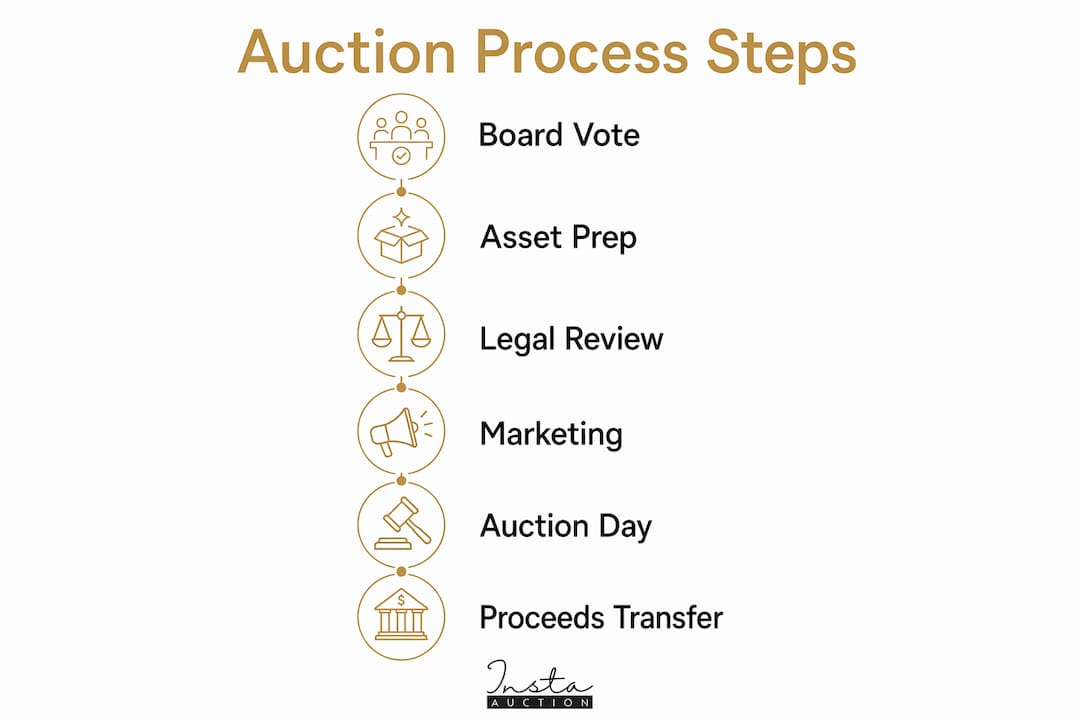
The nonprofit auction process begins with a formal board resolution. The board must vote to authorize the sale or dissolution of assets, and that vote must be thoroughly documented to avoid IRS or state scrutiny. Without this resolution on record, the entire auction is legally vulnerable.
Once the board approves the sale, the organization builds a complete asset inventory. Every item gets appraised, described, and photographed. Meticulous cataloging and photography turn raw inventory into compelling sale offerings that attract competitive bids. Skipping this step produces lower bids and slower sales.
Marketing comes next. Nonprofit assets attract a specific buyer pool: other charities, government agencies, resellers, and the general public. The marketing strategy must reach those groups through targeted digital channels, email lists, and auction listing platforms. Insta-auction, for example, markets items across multiple digital channels using trained appraisers who understand how to position assets for the right audience.
- Board resolution: Vote and document the decision to liquidate.
- Inventory and appraisal: Catalog every asset with descriptions, photos, and condition notes.
- Marketing: Target buyers through digital channels and auction platforms.
- Auction format selection: Choose online, live, or hybrid format based on asset type and buyer geography.
- Bidding period: Open bidding, monitor activity, and answer buyer questions.
- Closeout: Collect payment, arrange asset removal, and file all required records.
Pro Tip: Online auction formats work best for equipment, furniture, and collectibles because they reach national buyers. Live formats suit real estate or high-value single assets where in-person inspection builds buyer confidence.
How do legal and regulatory rules shape nonprofit liquidation auctions?

Legal compliance is not optional in nonprofit asset liquidation. It is the framework the entire auction rests on. Most states require nonprofits to notify the state Attorney General 20–60 days before dissolving or selling substantial assets. That window exists so regulators can review whether the sale serves the public interest.
Nonprofit assets are held in charitable trust for the public benefit, not owned by board members. This means assets must transfer only to other 501©(3) organizations or government units. Board members cannot distribute proceeds to themselves, founders, or private individuals. Violating this rule triggers personal liability.
Tax implications add another layer. Gains from asset sales used in unrelated business activities are subject to a federal corporate tax of 21% plus applicable state taxes under the Unrelated Business Income Tax rules. This matters when a nonprofit sells assets that were not directly tied to its exempt purpose.
Restricted funds require separate handling. Donor-restricted funds often need donor consent or court approval before restrictions can be modified or released. The Uniform Prudent Management of Institutional Funds Act governs this process in most states. Boards that ignore donor restrictions face legal challenges that can delay or void an auction.
“Nonprofit boards carry their fiduciary duty all the way through dissolution. Clear documentation and legal compliance are not administrative details. They are the primary protection for every board member involved in the liquidation process.”
Key legal requirements to address before any auction begins:
- File formal board resolution authorizing the sale
- Notify the state Attorney General within the required window
- Verify that all proceeds will go to qualifying 501©(3) entities or government units
- Identify and segregate donor-restricted funds
- Consult legal counsel on UBIT exposure for each asset category
- Maintain records of all notices, transfers, and filings for several years
What are the benefits and challenges of auctioning nonprofit assets?
Auctions deliver three core advantages over private sales: speed, transparency, and competitive pricing. A well-run auction compresses the sale timeline from months to weeks. Transparent bidding means the organization can demonstrate to regulators and donors that it achieved fair market value, which protects the board from accusations of mismanagement.
The biggest misconception about liquidation auctions is that they are simply sales with a timer. An auction is a complex process involving planning, cataloging, marketing, and logistics executed professionally to maximize outcomes. Organizations that treat it as a casual sale consistently leave money on the table.
Common challenges include:
- Inaccurate asset listings: Vague descriptions reduce bids and generate post-sale disputes.
- Title and lien issues: Unresolved UCC liens or unclear ownership block sales after bidding closes.
- Poor timing: Launching an auction during a holiday period or fiscal year-end reduces buyer participation.
- Underestimating logistics: Asset removal, payment collection, and record-keeping require dedicated coordination.
Professional auctioneers solve most of these problems before they start. They know how to structure auction terms that protect the seller, attract serious buyers, and close sales cleanly. For nonprofits without in-house auction experience, this expertise is the single biggest factor in final sale value.
Pro Tip: Set a reserve price on high-value assets. A reserve protects the organization from selling below fair market value, which is a fiduciary requirement, not just a preference.
Which assets sell well in nonprofit liquidation auctions, and how do you prepare them?
Nonprofit organizations typically hold a wide mix of assets. The most common categories that perform well at auction include vehicles, office equipment, medical or lab equipment, furniture, real estate, and specialty inventory tied to the organization’s mission.
Preparation determines whether an asset sells at fair market value or below it. Auction success relies heavily on how assets are cataloged, marketed, and presented rather than simply selling them quickly. A vehicle listed with mileage, service history, and clear photos draws far more bids than one listed as “used van, runs.”
Before listing any asset, verify its legal status. Pre-auction due diligence on UCC liens, titles, and lease responsibilities is critical and frequently overlooked. Failing this step leads to cancelled sales or disputes that harm both the nonprofit and buyers. For real estate, review title reports and any outstanding lease obligations before the auction opens.
Grouping assets logically also increases buyer interest. Office furniture sells better as coordinated lots than as individual chairs. Equipment from a single department attracts buyers who need a complete setup. Insta-auction’s approach of using trained experts to appraise and market items across digital channels reflects this principle: presentation and positioning drive competitive bids. Sellers can review auction-ready item examples to understand what strong asset presentation looks like in practice.
| Asset category | Key preparation steps |
|---|---|
| Vehicles | Title verification, mileage records, condition photos |
| Office equipment | Serial numbers, working condition notes, photos |
| Real estate | Title report, lien search, lease review |
| Furniture | Lot grouping, dimensions, material descriptions |
| Specialty inventory | Provenance documentation, appraisal, condition grading |
Key Takeaways
A nonprofit liquidation auction succeeds when legal compliance, thorough asset preparation, and professional auction management work together from the first board vote to the final record filing.
| Point | Details |
|---|---|
| Board resolution first | Document the vote to liquidate before any asset is listed or marketed. |
| Attorney General notice | File notice 20–60 days before the sale, as required by most state laws. |
| Assets go to 501©(3) entities | Proceeds cannot go to board members; they must transfer to qualifying organizations. |
| Preparation drives sale value | Detailed descriptions, photos, and lien clearance produce higher, cleaner bids. |
| Professional auctioneers reduce risk | Expert involvement increases final sale value and protects boards from liability. |
What I’ve learned from watching nonprofit boards get this wrong
Most nonprofit boards approach liquidation as an afterthought. They spend years building an organization, then treat the wind-down as a weekend project. That is where the real damage happens.
The most common error I see is boards assuming they own the assets. They do not. Nonprofit assets are held in trust for the public benefit, and the state Attorney General has oversight authority over how those assets are distributed. Boards that skip the notification requirement or try to distribute proceeds informally face enforcement actions that can follow individual members personally.
Early legal counsel is not a luxury. It is the difference between a clean closeout and a multi-year regulatory headache. Bring in an attorney who specializes in nonprofit dissolution before you list a single item. Then bring in a professional auctioneer who understands how to catalog, market, and close a sale properly. The combination of legal and auction expertise consistently produces better outcomes than boards trying to manage both internally.
Transparency also protects the organization’s legacy. Donors, community members, and partner organizations watch how a nonprofit handles its final chapter. A well-documented, professionally managed auction signals that the mission was honored to the end. That reputation matters for the people who led the organization and for any successor entity that carries the work forward. Nonprofits should maintain detailed dissolution records for several years after closing, because audits and legal inquiries do not always arrive immediately.
— Admin
How Insta-auction helps nonprofits run effective liquidation auctions
Nonprofits handling asset liquidation need more than a listing platform. They need appraisal expertise, targeted marketing, and a process that holds up to regulatory review.

Insta-auction provides trained experts who appraise and market assets across digital channels, helping nonprofit sellers reach the right buyers and achieve competitive prices. The platform’s focus on thorough item presentation means your assets are positioned to attract serious bids, not just casual browsers. Insta-auction also donates a portion of every sale to selected charities, so your auction contributes to the broader mission even as it closes one chapter. For nonprofits ready to plan a compliant, well-managed auction, explore Insta-auction’s services and see how expert support changes the outcome.
FAQ
What is a nonprofit liquidation auction?
A nonprofit liquidation auction is a structured sale in which a nonprofit organization sells its assets to the highest bidder, converting property into cash or transferring it to qualifying entities under state and federal law.
How long does the nonprofit auction process take?
The timeline varies by asset volume and jurisdiction, but most nonprofit liquidation auctions take 60–120 days from board resolution to final closeout when legal notice requirements and asset preparation are factored in.
Do nonprofit boards need Attorney General approval to auction assets?
Most states require nonprofits to notify the state Attorney General 20–60 days before dissolving or selling substantial assets, though approval requirements vary by jurisdiction.
Can nonprofit auction proceeds go to board members?
No. Nonprofit assets must transfer only to other 501©(3) organizations or government units. Distributing proceeds to board members or founders violates state and federal law.
What taxes apply to nonprofit liquidation auction sales?
If assets were used in activities unrelated to the organization’s exempt purpose, gains from their sale may be subject to the Unrelated Business Income Tax, which carries a federal corporate rate of 21% plus applicable state taxes.