

An undervalued auction listing is any lot priced below its true market value, giving informed buyers a real financial edge. Collectors and bargain hunters who learn to spot undervalued auction listings consistently outperform casual bidders because they apply method, not luck. The gap between a listing’s hammer price and its actual worth is where profit lives. Understanding buyer’s premiums of 15–25%, catalog language, and bidding psychology separates the buyers who win from the ones who overpay.
What makes an auction listing undervalued?
The most reliable signal of an undervalued lot is the gap between the auction estimate and the item’s documented market value. Auction estimates are strategic tools, not guarantees. Houses set low estimates deliberately to generate competitive bidding, which means a $500 estimate on a piece worth $2,000 is a feature, not an error.
Catalog language is the second major signal. Phrases like “attributed to,” “circle of,” or “studio of” indicate the auction house is uncertain about the item’s origin. That uncertainty in attribution lowers the estimate and scares off casual buyers. For a prepared collector who has done independent research, that same uncertainty is an opening.

Provenance is the third factor. Items with a documented chain of ownership command higher prices because authentication risk drops. When provenance is thin or absent, the price drops too, sometimes well below what a confident buyer with their own research could justify paying.
Key catalog red flags and green lights to watch:
- Red flags: “Attributed to,” “manner of,” “after,” or “school of” in the title
- Green lights: Full artist or maker name, exhibition history, published references, and condition reports
- Neutral signals: Estimates set at or below recent comparable sales, which may reflect house strategy rather than true value
- Documentation gaps: Missing receipts or ownership records that a buyer could fill through independent research
Pro Tip: Search auction house archives for the same artist or maker across past sales. If comparable pieces sold above estimate consistently, a low estimate on a new listing is likely a bidding trigger, not a reflection of low value.
Which item categories hide the best auction bargains?
Minor lots in large auctions are the most overlooked source of undervalued finds. When a major sale features a headline painting worth $500,000, the small format works in the same catalog, such as sketches, postcards, and study prints from the 1950s through the 1980s, attract almost no attention. Collector focus narrows to the marquee item, and everything else sells cheap.
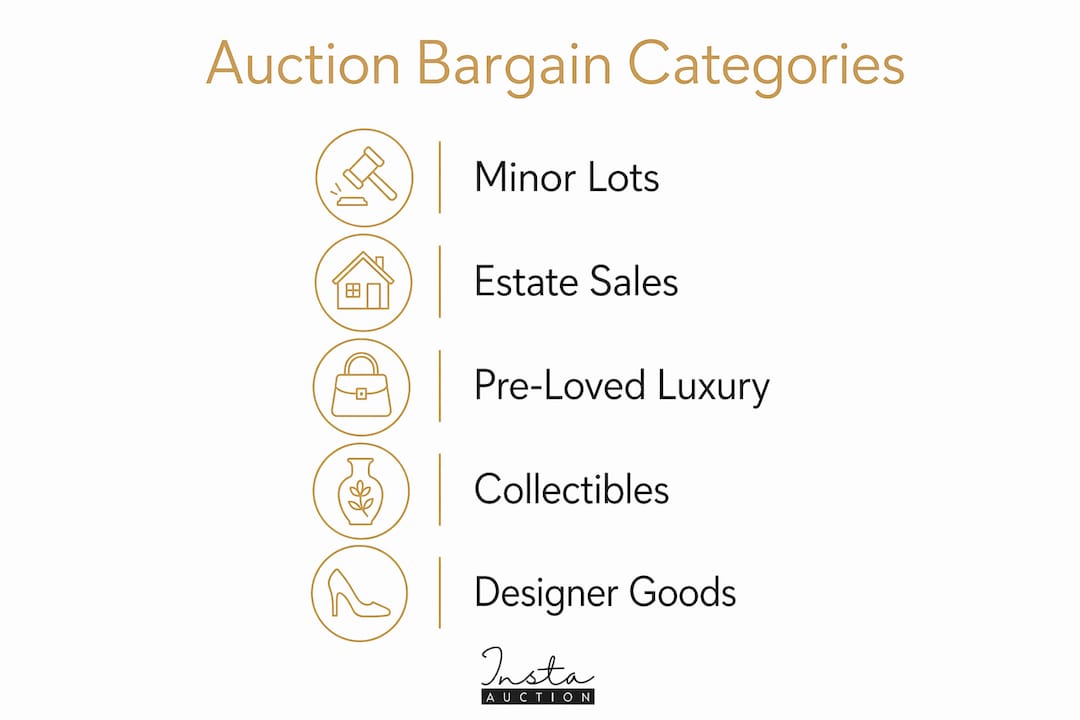
Regional and estate auctions offer a different kind of opportunity. Items auctioned in low-demand geographic markets often sell for a fraction of their global value. This is geographic arbitrage in practice. A piece of mid-century American studio pottery might fetch $80 at a rural estate sale in the Midwest and $800 at a specialty auction in New York. The item is identical. The audience is not.
The categories most likely to yield hidden auction gems include:
- Small format artworks: Drawings, watercolors, and prints under 12 inches that get buried in large catalog lots
- Vintage tools and hardware: Pre-1970 hand tools from known makers like Stanley or Disston, often miscategorized or listed with generic descriptions
- Mid-century collectibles: Ceramics, glass, and decorative objects from the 1940s through the 1970s, especially from regional American makers
- Postcards and ephemera: Topographic, real photo, and advertising postcards that specialists value far above general estimates
- Specialty textiles: Quilts, samplers, and needlework that require niche knowledge most generalist bidders lack
Pro Tip: Search for intentional misspellings of designer names and alternate period spellings when browsing online auction catalogs. A “Tiffanys” lamp or a “Roseville” pottery piece listed as “Rosevile” will appear in far fewer search results, reducing competition dramatically.
How do you calculate your true maximum bid?
The hammer price is not your cost. Every auction adds a buyer’s premium on top of the winning bid. That premium typically runs 15–25%, and sales tax and shipping stack on top of that. Ignoring these costs is the most common and most expensive mistake buyers make.
The correct method is to calculate your true maximum hammer price before you ever enter a room or open a bidding window. Start with the item’s fair market value, which you establish through comparable sales research. Then subtract every cost you will pay after the hammer falls.
True maximum hammer formula:
| Cost component | How to calculate |
|---|---|
| Fair market value | Research comparable recent sales |
| Minus buyer’s premium | Subtract 15–25% of hammer price |
| Minus sales tax | Apply your local rate to total cost |
| Minus shipping or transport | Get a real quote before bidding |
| Minus rehab or restoration | Estimate based on condition report |
| = True maximum hammer | The highest bid you can place profitably |
Experts recommend setting your maximum bid at 50–60% of retail market value after accounting for all additional costs. That margin protects you if the item sells for less than you expected on resale, or if restoration costs run higher than estimated.
Common mistakes that destroy profit margins:
- Bidding based on the estimate rather than independent market research
- Forgetting to add the buyer’s premium when setting a mental ceiling
- Skipping the condition report and underestimating restoration costs
- Letting the excitement of a live auction push bids past the calculated limit
What bidding strategies help you win undervalued lots?
Proxy bidding is the foundation of disciplined auction buying. You set your maximum in advance, submit it, and let the system bid on your behalf up to that ceiling. This removes the emotional pressure of real-time competition and prevents you from chasing a lot past your calculated limit. Most online auction platforms support proxy bidding natively.
Sniping is the advanced version of this discipline. Professional bidders use sniping software like GavelMate to place bids in the final seconds of a timed auction. The logic is simple: a late bid gives competitors no time to respond emotionally, which reduces bidding wars and keeps final prices lower. Sniping works best on timed online auctions where the closing countdown is fixed.
Chandelier bidding is the trap you need to recognize. Some auctioneers call out fictitious bids from the “chandelier” to push the price up when real bidding stalls. If you see a live auction where bids seem to appear without visible bidders, you are likely watching this practice. The defense is your pre-set maximum. You do not negotiate with a ceiling.
Bidding tactics that protect your capital:
- Set your proxy maximum before the auction opens, not during live bidding
- Bid early in timed auctions only if you want to signal interest and deter casual bidders
- Wait until the final 10 seconds on timed online lots to place your true maximum
- Walk away the moment the price exceeds your calculated limit. No exceptions.
Pro Tip: Register for estate sale auctions well before the closing date. Early registration gives you time to review condition reports, ask questions, and set your proxy bid without deadline pressure.
Key Takeaways
Finding undervalued auction items requires research, cost discipline, and bidding strategy applied together before you ever place a bid.
| Point | Details |
|---|---|
| Read catalog language carefully | Phrases like “attributed to” signal uncertainty and potential undervaluation worth researching. |
| Target overlooked categories | Small format works, vintage tools, and mid-century collectibles yield the most hidden bargains. |
| Calculate total cost first | Subtract buyer’s premium, tax, shipping, and rehab from fair market value before setting your max bid. |
| Use proxy and sniping tactics | Set your maximum in advance and place final-second bids to reduce emotional bidding wars. |
| Geographic arbitrage works | Items in low-demand regional auctions often sell well below their global market value. |
What I have learned from years of watching auction buyers win and lose
The buyers who consistently find hidden auction gems are not luckier than everyone else. They are more prepared. The ones who lose money share one trait: they decide what to pay after the bidding starts, not before.
Geographic arbitrage is the most underused strategy I see. Collectors in major cities fixate on the same platforms and the same sales. Meanwhile, regional estate auctions in smaller markets regularly surface price inefficiencies that a well-researched buyer can exploit. A piece of signed American art glass that would draw serious competition in Chicago can sit at a rural Wisconsin auction with two bidders in the room.
Provenance gaps scare most buyers away, and that fear is often overblown. A missing receipt from 1962 does not mean a piece is inauthentic. It means the buyer needs to do the work that the auction house did not. Collectors who build relationships with appraisers and registrars can fill those gaps and buy at prices that reflect the market’s fear rather than the item’s reality.
The hardest discipline is walking away. Every experienced auction buyer I have watched has a story about the lot they loved too much to leave. They exceeded their limit by “just a little” and paid for it later. Your calculated maximum is not a suggestion. It is the only number that matters once the bidding opens.
— Admin
Where Insta-auction helps you find your next great buy
Insta-auction specializes in pre-loved luxury items, collectibles, and estate sales, which are exactly the categories where undervalued lots appear most often.
The platform’s trained appraisers review and market items across multiple digital channels, which means listings arrive with more documentation than you typically find at generalist auction houses. That documentation is your research shortcut. Buyers can browse luxury goods auctions or explore estate sale listings to find lots that match the strategies covered here. Insta-auction also donates a portion of every sale to charity, so the value you find supports something beyond your collection.
FAQ
What does “undervalued auction listing” mean?
An undervalued auction listing is a lot priced below its true market value, giving the winning bidder a financial advantage. The gap appears due to low estimates, catalog uncertainty, provenance gaps, or limited buyer competition.
How do buyer’s premiums affect my maximum bid?
Buyer’s premiums of 15–25% are added to the hammer price, raising your total cost significantly. Always subtract the premium, taxes, and shipping from fair market value before setting your ceiling.
What catalog phrases signal an undervalued lot?
Phrases like “attributed to,” “circle of,” or “studio of” indicate lower attribution confidence. These qualifiers reduce competition and can create buying opportunities for collectors who research independently.
Does sniping software actually work?
Yes. Tools like GavelMate place bids in the final seconds of timed auctions, giving competitors no time to respond. This reduces bidding wars and helps buyers secure lots closer to their true maximum without emotional escalation.
Where are undervalued items most commonly found?
Regional estate auctions, specialty sales, and minor lots within large catalogs produce the most overlooked undervalued items. Small format artworks, vintage tools, and mid-century collectibles from the 1940s through the 1980s offer the highest probability of finding bargains.