

What the 2026 luxury market trends mean for pre-owned auctions
Pre-owned luxury is no longer the backup plan. The global pre-owned luxury market is expanding faster than first-hand luxury, which is growing more slowly. In the US, pre-owned is a rapidly growing and leading national market.
For buyers and sellers on platforms like Insta-auction, these numbers translate directly into opportunity. Here is what is driving the shift:
- Younger buyers treat resale as the default entry point into luxury, not a compromise
- Sustainability now outweighs the discount motive for Gen Z and Millennial shoppers
- Provenance and condition determine price realization more than brand name alone
- Watches, handbags, and jewelry lead resale value retention across all categories
- Digital platforms with expert authentication are capturing the trust premium
How younger generations are reshaping luxury consumption patterns
Gen Z and Millennials are the engine behind pre-owned growth. These generations prioritize sustainability and value, driving most of the resale market’s expansion. They are not buying secondhand because they cannot afford new. They are buying it because pre-owned signals taste, environmental awareness, and financial intelligence.
Social media discovery is central to this behavior. A buyer finds a Chanel Classic Flap on Instagram before they ever search a platform. That path from social feed to auction bid is now the dominant purchase journey for buyers under 35.
Stat to know: Pre-owned luxury goods often cost significantly less than new, making premium brands more accessible to aspirational buyers who may later purchase full-price items as their budgets increase.
Insta-auction’s specialists consistently see younger bidders entering through accessible price points on iconic pieces, then returning for higher-value lots. Resale is their on-ramp to luxury, not their ceiling.
Why affluent buyers now choose resale as their primary acquisition channel
Affluent buyers are not shopping pre-owned for discounts. They are shopping it because first-hand channels cannot deliver. Hermès Birkin bags have lengthy waiting times at boutiques, and Chanel limits Classic Flap purchases to one per customer per year at many locations. Pre-owned delivers in days.
There is also a quality argument. Buyers increasingly view 2010–2017 production pieces as better made than recent first-hand goods from houses that scaled aggressively post-2018. And for Hermès especially, pre-owned has become an asset class rather than discount inventory.
Key reasons affluent buyers prefer resale:
- Scarcity bypass: waitlists and purchase quotas make boutiques impractical for in-demand pieces
- Quality perception: older production years carry a craftsmanship premium
- Investment logic: strong resale retention lowers the perceived cost of ownership
- Authentication infrastructure: trusted platforms remove the counterfeit risk that once capped the market
Certified Pre-Owned programs from brands like Rolex convert gray-market activity into a governed channel, protecting price floors while giving buyers warranty-backed confidence.
How provenance, condition, and documentation drive auction prices
Provenance is the single biggest variable separating a good price from a great one at auction. Brand name gets you in the room. Documentation closes the deal. Original packaging, purchase receipts, service records, and authenticity certificates all push realized prices higher, sometimes dramatically so.
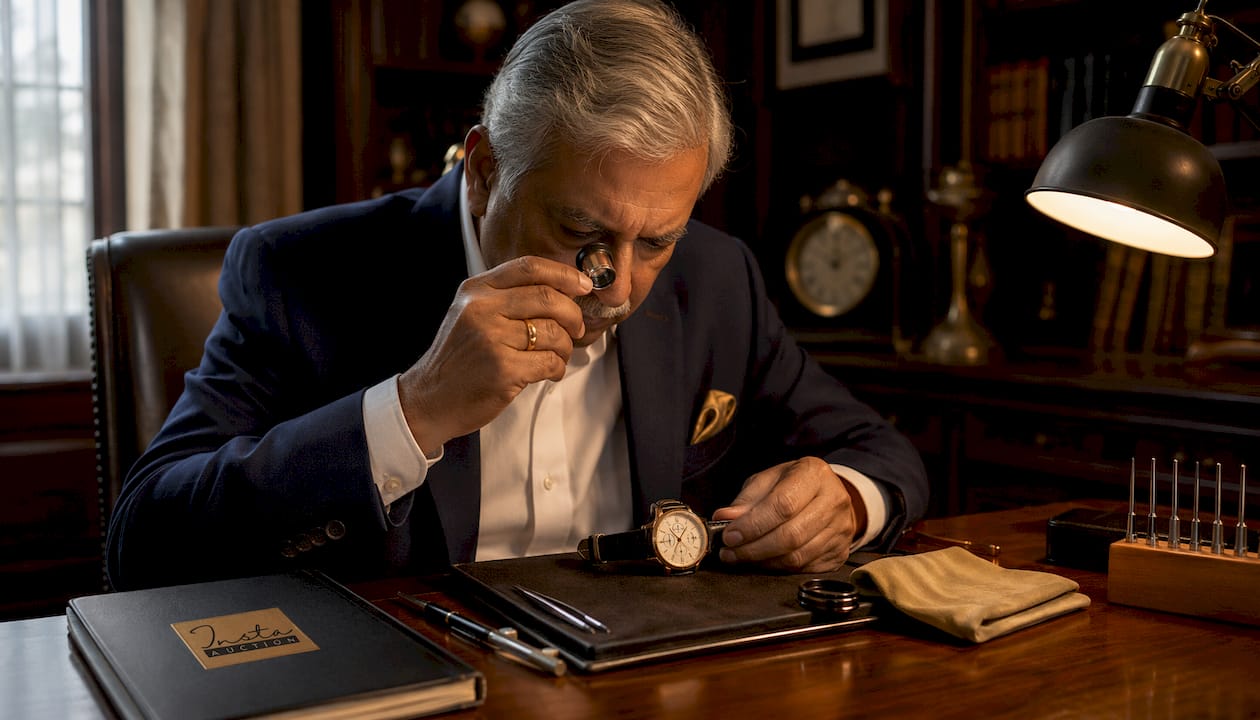
Condition grading matters just as much. A Chanel Classic Flap in Caviar leather graded Condition A commands a meaningfully different price than the same bag in Condition C. Buyers at auction use condition grades as a proxy for trust when they cannot physically inspect an item.
Pro Tip: Before listing, gather every document you have: original box, dust bag, receipt, and any service history. Insta-auction’s specialists can help you understand how each element affects your reserve price and final bid.
Authentication technology is raising the bar across the market. AI image analysis, NFC-embedded tags, and blockchain provenance records are lowering the cost of verification while raising buyer confidence. Insta-auction’s expert appraisal process applies this kind of rigorous documentation review to every consignment.
How luxury brands balance exclusivity with responsible branding in resale
Exclusivity is the psychological engine of luxury consumption. Scarcity justifies the premium. So when resale expands access, brands face a real tension: does wider availability erode the status signal that made the item desirable in the first place?
Research from a 2026 trade-off study found that brand engagement with secondhand markets reduces perceived exclusivity but increases perceived sustainability, and the sustainability effect tends to outweigh the exclusivity loss on purchase intention. For brands targeting Gen Z and Millennials, that is a net positive.
Tactics luxury brands use to protect prestige in resale:
- Certified Pre-Owned programs with official warranties and authorized dealer networks
- Invitation-only drops and curated events that maintain scarcity signals
- Selective platform partnerships that keep brand presentation consistent
- Provenance documentation that ties pre-owned pieces back to the original brand story
Where US luxury resale is growing fastest
Geography shapes opportunity in the US market. The Southern US holds the largest share of the pre-owned luxury market, driven by urban growth, lifestyle spending, and a strong culture of aspirational purchasing. The Western region follows closely, supported by deep digital platform adoption and large urban populations.
Midwest cities like Chicago and Minneapolis are seeing growth among younger affluent professionals who prioritize both value and sustainability. The Northeast, anchored by New York, remains a key consignment and purchase hub despite holding a smaller overall revenue share.
Demographically, women drive the majority of revenue through handbags, clothing, and jewelry. The male segment is expanding fast through watches, sneakers, and streetwear, categories that hold strong collector appeal and resale value.
How inflation and investment appeal affect luxury resale prices
Economic pressure pushes buyers toward pre-owned. Rising tariffs on imported goods are making new luxury items more expensive, nudging even affluent shoppers toward purchases that hold value. The US luxury resale market is projected to grow at a 9.6% CAGR, reaching $60.11 billion by 2030.
Hard luxury categories, watches and fine jewelry, behave more like durable assets than apparel. They carry public reference prices, constrained supply, and intrinsic material value. Iconic handbags from Hermès, Chanel, and Louis Vuitton follow the same logic. Ready-to-wear depreciates quickly unless a piece is archival or a notable collaboration.
What the future of pre-owned luxury auctions looks like
The next phase of the market will be defined by the race to own trusted reference pricing. Whoever publishes the authoritative index for a Daytona or a Birkin controls the anchor every other transaction negotiates against. Authentication technology, including blockchain provenance and embedded NFC tags, will lower the cost of that trust infrastructure.
Personalized shopping experiences and AR/VR tools will reduce friction for high-value online transactions. Buyers who once hesitated to bid four figures on a phone will do it routinely as these tools mature. Platforms that combine expert human curation with AI-driven authentication will capture the trust premium that drives margin.
For sellers, the implication is clear: prepare your items with documentation, choose platforms with genuine authentication credentials, and list in categories where reference pricing is deep. For buyers, category knowledge and condition literacy are the skills that separate collectors from casual shoppers.
Insta-auction brings trained specialists, competitive bidding, and a community-driven approach to every pre-owned luxury auction. Whether you are consigning a Rolex or bidding on a Birkin, the platform’s expert appraisal and multi-channel marketing deliver results that traditional auction houses rarely match. Explore auction-ready luxury items and see what your pieces could achieve.
Key Takeaways
The global pre-owned luxury market grew 11.8% to $52 billion in 2026, outpacing first-hand market growth at 2.9%. The US pre-owned market led globally with 14.2% year-over-year growth.
| Younger buyers drive volume | Gen Z and Millennials treat resale as the primary entry point, not a discount fallback. |
| Provenance determines price | Original packaging, receipts, and service history push realized auction prices higher. |
| Hard luxury holds value | Watches, fine jewelry, and iconic handbags retain value far better than ready-to-wear. |
| Market forecast is strong | The luxury resale market is projected to reach $60.11 billion by 2030 at a 9.6% CAGR. |
FAQ
How fast is the US pre-owned luxury market growing?
The US pre-owned luxury market grew 14.2% year over year in 2026, outpacing both the global pre-owned average and the first-hand luxury market’s 2.9% growth.
Which luxury categories hold the best resale value?
Watches, fine jewelry, and iconic handbags from Hermès, Chanel, and Louis Vuitton retain value most reliably. Ready-to-wear depreciates quickly unless the piece is archival or a notable collaboration.
Why do affluent buyers prefer pre-owned over buying new?
Long boutique waiting lists, purchase quotas, and the investment appeal of pieces that appreciate over time make pre-owned the practical and financially rational choice for many affluent buyers.
How does sustainability influence luxury consumer behavior?
Research shows that a brand’s engagement with secondhand markets increases purchase intention among sustainability-oriented consumers, particularly Gen Z and Millennials, because the sustainability signal outweighs the reduction in perceived exclusivity.
What documentation should sellers include with a luxury auction listing?
Original packaging, purchase receipts, authenticity certificates, and any service history all increase buyer confidence and realized prices. Insta-auction specialists review this documentation as part of every consignment appraisal.