

Online auction bidding is the competitive process of submitting bids through internet platforms to purchase items, where the highest bid at auction close wins the sale. This article covers what is online auction bidding explained in full, including the mechanics, fees, formats, and strategies you need to bid with confidence. Online auctions operate under strict no-return policies, meaning every purchase is final unless fraud is proven. Buyer’s premiums, the standard industry fee added on top of your winning bid, typically range from 5% to 20% depending on the platform and payment method. Whether you are clearing an estate, downsizing a home, or hunting for a collectible, understanding the online bidding process before you place your first bid saves money and prevents costly surprises.
How does the online bidding process work?
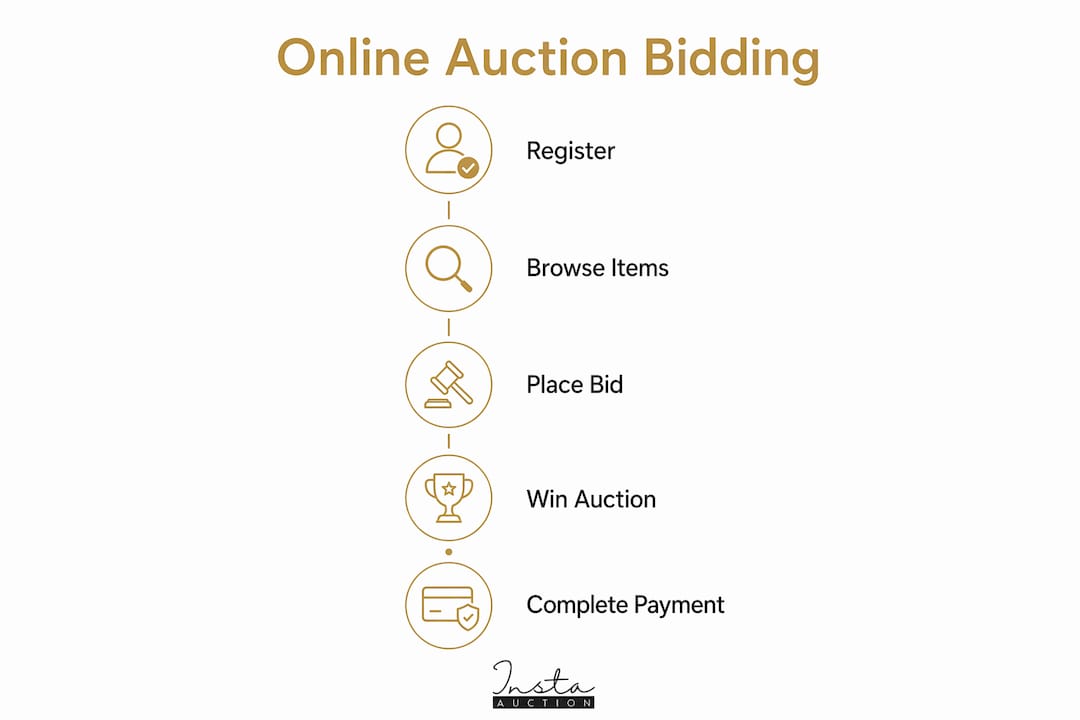
The online bidding process is a structured competition where registered buyers submit increasing bids on listed items until the auction closes. Each bid must exceed the previous one by a set increment, which the platform defines in advance. The auction ends when time runs out, and the highest bidder at that moment wins.
Two bidding methods exist: manual and proxy. Manual bidding means you submit each bid yourself in real time. Proxy bidding lets you set a maximum amount and have the system automatically bid on your behalf up to that limit. Proxy bidding removes the pressure of watching the clock and reduces the risk of emotional overbidding in the heat of the moment.

Auction timing rules vary by platform. Hard close auctions end at a fixed time, no matter when the last bid arrives. Soft close auctions automatically extend the countdown if a bid lands in the final minutes. Soft close extensions prevent last-second sniping and force every bidder to compete on value, not timing skill. Some platforms apply a 15-minute rule that resets the clock whenever a bid arrives near the end.
Key mechanics to know before you bid:
- Bid increments: Platforms set fixed steps, such as $5 or $25, by which each new bid must exceed the last.
- Proxy bids: The system bids the minimum needed to stay ahead, up to your set maximum.
- Soft close: The auction extends automatically when late bids arrive, keeping competition fair.
- Outbid notifications: Most platforms send email or text alerts when another bidder surpasses you.
- Reserve price: Some auctions set a hidden minimum the seller will accept before the item sells.
Pro Tip: On soft close platforms, placing your true maximum bid early is more effective than waiting for the final seconds. The system will defend your position automatically, and last-minute rushes will only extend the auction further.
What are the key costs and fees in online auctions?
Your winning bid is never your final cost. Every online auction adds fees on top of the hammer price, and failing to account for them is the most common mistake new bidders make.
The buyer’s premium is the primary fee, ranging from 5% to 20% of your winning bid. That range is wide because platforms set their own rates, and some charge higher premiums for credit card payments than for bank transfers. Beyond the premium, you may owe sales tax, shipping, handling, and insurance, especially for fragile or high-value items.
Professional bidders use a total all-in cost calculation before placing any bid. The method works like this: decide the maximum you are willing to pay for the item in your hands, then subtract every fee you expect to owe. The number left is your true maximum bid. This approach prevents the common trap of winning an auction and then discovering the real cost is 30% higher than expected.
| Fee type | Typical range | Notes |
|---|---|---|
| Buyer’s premium | 5%–20% of hammer price | Varies by platform and payment method |
| Sales tax | Varies by state | Applies in most U.S. jurisdictions |
| Shipping and handling | Varies by item size | Fragile or large items cost significantly more |
| Insurance | Optional or required | Often required for high-value lots |
| Payment processing | 2%–3% for credit cards | Bank transfer often avoids this fee |
Payment deadlines are strict in online auctions. Most platforms require full payment within 24–72 hours of winning. Missing the deadline can result in losing the item, forfeiting a deposit, and being banned from future bidding.
Pro Tip: Before bidding on any item, open a notes app and write out your all-in cost calculation. Include the buyer’s premium, estimated shipping, and tax. Set that number as your hard ceiling and do not cross it.
What are the different types of online auctions?
Online auctions come in three main formats, and each one changes how you should approach bidding. Knowing the format before the auction opens is as important as knowing the item’s value.
Live online auctions run in real time with an auctioneer calling bids. You participate through a web browser or app, competing alongside bidders in a physical room and others online. The pace is fast, lots move quickly, and you have seconds to decide. This format suits experienced bidders who know their limits in advance.
Timed auctions list items with a set closing window, often 24–72 hours per lot. There is no auctioneer. You browse, research, and bid at your own pace. Soft close extensions are common in timed auctions, which rewards patience over speed. This format is the most accessible for families and first-time bidders because it allows thorough research before committing.
Catalog-only auctions present items in a digital catalog without live interaction. Bidders submit absentee bids before a set date, and the highest absentee bid wins. This format appears frequently in estate sales and downsizing situations, where online estate auctions reach national and global audiences, increasing competition and final sale values for families liquidating a home.
The format directly shapes your strategy. In a live auction, hesitation costs you the lot. In a timed auction, placing your proxy bid early and walking away is often the most effective approach. In a catalog auction, your research before submission is everything because you cannot react once bids are locked in.
How to bid wisely, especially for estate sales and downsizing
Effective bidding starts well before the auction opens. The buyers who consistently win at fair prices follow a repeatable preparation process, not gut instinct.
Research comparable sales. Successful bidders rely on verified comparable sales, not guesses. Search recent auction results for the same item or close equivalents. Condition, provenance, and authenticity all affect value significantly.
Calculate your all-in maximum. Add the buyer’s premium, estimated shipping, tax, and any insurance to your target price. Work backward to find your true maximum bid. Write it down and treat it as a firm limit.
Read the platform rules before bidding. Platform-specific rules on fees, payment deadlines, bidding increments, and return policies vary widely. Review them two to three days before the auction opens, not in the final minutes.
Examine the listing carefully. Study every photo. Read condition notes in full. If the listing lacks detail, contact the auction house directly before bidding. For estate sales, ask whether items have been appraised or are sold purely as found.
Set a proxy bid and step away. Emotional bidding is the fastest way to overpay. Set your proxy bid at your calculated maximum, then close the browser. The system will compete on your behalf without the pressure of watching the price climb.
Document your results. Keep a simple log of every auction you enter: the item, your maximum bid, the final price, and whether you won. Patterns emerge quickly. You will spot which categories you consistently overpay for and which platforms charge the highest fees.
For families managing estate sales and downsizing, timed auctions with soft close extensions offer the most control. They allow time to assess each lot carefully, consult family members, and avoid rushed decisions under live auction pressure.
Pro Tip: If you are bidding on items from a loved one’s estate as a buyer, set a strict budget before you start. Emotional attachment to familiar objects is real and will push you past rational limits faster than any competitive bidder will.
Key Takeaways
Online auction bidding rewards preparation, fee awareness, and discipline far more than speed or last-second tactics.
| Point | Details |
|---|---|
| Know the legal framework | All online auction purchases are final under “as-is, where-is” rules; no returns unless fraud is proven. |
| Calculate all-in costs first | Subtract buyer’s premiums (5%–20%), shipping, and tax from your maximum willingness to pay before bidding. |
| Use proxy bidding | Set your true maximum as a proxy bid early; the system competes for you without emotional pressure. |
| Match strategy to format | Live auctions require instant decisions; timed auctions reward research and patience. |
| Document every auction | Tracking bids, results, and fees reveals patterns that sharpen your strategy over time. |
Why fee awareness changed how I bid
The single biggest shift in my approach to online auctions came from a mistake, not a win. I once placed a winning bid on a vintage piece at what felt like a fair price, only to discover the buyer’s premium, shipping, and state tax pushed the real cost nearly 35% above my bid. The item was not worth that. I paid it anyway because I had already won.
That experience taught me that the hammer price is almost irrelevant. The all-in cost is the only number that matters. Now I run the full calculation before I place a single bid, and I treat that ceiling as non-negotiable. The discipline feels rigid at first. Over time, it becomes automatic.
The other lesson I learned is that soft close auctions are genuinely fairer than hard close formats. I used to think last-minute bidding was a skill. It is not. It is a gamble that depends on your internet connection and reaction time. Soft close platforms remove that variable entirely and force every bidder to answer one honest question: what is this item actually worth to you?
For families working through an estate sale, my strongest advice is to separate the emotional value of an item from its market value before the auction opens. Those are two different numbers, and confusing them is expensive. Use undervalued listing guides to train your eye for real market value before you bid on anything with personal significance.
— Admin
Insta-auction: support for every stage of your auction experience
Families and individual buyers navigating online auctions for the first time benefit from expert guidance, especially when estate sales, luxury items, or downsizing decisions are involved.

Insta-auction specializes in pre-loved luxury items and collectibles, with trained appraisers who evaluate and market items across digital channels to reach the widest possible audience. Whether you are a buyer searching for unique finds or a family preparing items for sale, Insta-auction provides the expertise to get fair results. Browse auction-ready luxury items to see the categories and quality standards the platform maintains. For families managing a transition, the estate sales guide walks through every step of the process. Insta-auction also donates a portion of every sale to selected charities, so your participation supports something beyond the transaction.
FAQ
What is a buyer’s premium in an online auction?
A buyer’s premium is a fee added to your winning bid, typically ranging from 5% to 20% of the hammer price. It is charged by the auction platform and must be included in your total cost calculation before you bid.
Can you return items won at an online auction?
Online auctions operate under “as-is, where-is” rules, meaning no returns or warranties apply unless the seller committed fraud. Always examine listings and condition reports thoroughly before bidding.
What is proxy bidding and how does it work?
Proxy bidding lets you enter your maximum bid once, and the system automatically places the lowest bid needed to keep you in the lead up to that limit. It removes the need to monitor the auction in real time and reduces emotional overbidding.
What is a soft close auction?
A soft close auction automatically extends the bidding window when a bid arrives in the final minutes, preventing last-second sniping. This format ensures the winner is the highest-value bidder, not the fastest typist.
How do online auctions help families with estate sales?
Online estate auctions reach national and global audiences, which increases competition and drives up final sale prices compared to local-only sales. Families managing downsizing or liquidation benefit from the transparent bidding process and broader market access.