

Auction items are defined by one core trait: they attract competitive bidding because their value is rare, uncertain, or emotionally compelling. The types of items best suited for auction share three qualities — scarcity, collectible appeal, or a market value that no fixed price can fully capture. Coins and jewelry sell fastest at estate sales, while autographed memorabilia and exclusive experiences dominate live charity events. Knowing which category your items fall into is the single most important decision you will make before listing anything.
1. What categories of items sell best at estate or family auctions?
Coins, jewelry, and tools consistently top the sales velocity charts at estate auctions. Furniture ranks as the hardest category to sell. That gap exists because buyers at estate sales favor items they can use immediately or resell with confidence.

The practical logic here is straightforward. A gold ring or a coin collection has a recognized market value, fits in a pocket, and ships easily. A sectional sofa requires a truck, a second set of hands, and a buyer who happens to need that exact size. The friction alone kills bids.
Here is how the major estate auction categories break down:
- Coins and currency: High demand, easy to authenticate, and simple to ship. Rare coins attract both collectors and investors, creating genuine bidding competition.
- Jewelry: Gold, silver, and gemstone pieces sell fast because buyers trust the intrinsic value. Signed or designer pieces command even stronger prices.
- Tools and garage items: Power tools, hand tools, and workshop equipment attract practical buyers who know exactly what they are worth at retail.
- Collectibles and antiques: These can be the highest earners, but only when priced correctly. Mispriced collectibles sit unsold. Research comparable sales before listing.
- Art and decorative objects: Smaller pieces with clear provenance or artist signatures perform well. Large, unsigned works are harder to move.
- Furniture: Bulky, style-dependent, and expensive to transport. Auction is rarely the best channel unless the piece is genuinely antique or designer-signed.
Pro Tip: Before listing collectibles, check recent sold prices on recognized price guides or auction records. Overpricing a collectible by even 20% can kill all bidding interest.
The key insight from estate sale data is that buyer preferences favor utility and resale confidence. Items that pass both tests sell fast. Items that fail either test tend to linger.
2. Which items perform best in live auctions, including charity galas?
Live auctions operate on energy and exclusivity. The best items for a live auction format are those that create a story the auctioneer can tell in under two minutes and that feel impossible to get anywhere else.
Autographed memorabilia, travel packages, food and drink experiences, and one-of-a-kind adventures are the top performers in live auction settings. A signed jersey from a championship team, a private chef’s dinner for ten, or a zero-gravity flight experience all share one trait: you cannot buy them on a shelf. Scarcity and exclusivity drive perceived value upward, which is why these categories consistently generate bidding wars.
Pacing matters as much as item selection. Limiting a live auction lineup to 12–15 items keeps bidder attention sharp and prevents fatigue. More items dilute excitement. Fewer items leave money on the table.
| Item type | Bidder demand | Exclusivity level |
|---|---|---|
| Autographed memorabilia | Very high | High |
| Travel packages (cruises, ski passes) | High | Medium to high |
| Food and drink experiences | High | Medium |
| One-of-a-kind adventures | Very high | Very high |
| Celebrity meet-and-greet | High | Very high |
| Luxury hotel stays | Medium to high | Medium |
The table above shows a clear pattern. Items that combine high demand with genuine exclusivity produce the strongest results. Travel packages are popular because they feel aspirational. Adventures like hot air balloon rides or zero-gravity flights win because most bidders have never done them and may never get another chance.
3. Popular silent auction items and affordable auction choices
Silent auctions work differently from live events. Bidding is asynchronous, meaning attendees browse at their own pace and place bids on paper or through a mobile app. Silent auctions accommodate a wider item selection than live formats because there is no auctioneer managing crowd attention.
That flexibility opens the door to a broader mix of price points. Luxury goods like designer handbags, signed sports memorabilia, and premium wine collections attract serious bidders. Budget-friendly items like gift cards, themed gift baskets, and spa vouchers pull in casual participants who might otherwise skip bidding entirely.
Strong silent auction item categories include:
- Luxury goods: Designer handbags, fine jewelry, and high-end watches draw competitive bids from attendees who recognize the brand value.
- Signed sports memorabilia: Jerseys, helmets, and photographs with certificates of authenticity are perennial favorites.
- Experience packages: Cooking classes, wine tastings, and concert tickets offer something money alone cannot replicate.
- Gift cards: Practical, universally appealing, and easy to value. Retail and restaurant gift cards rarely go unbid.
- Themed gift baskets: A well-curated spa basket or gourmet food collection can attract multiple bidders across different budget levels.
- Virtual experiences: Online cooking classes, virtual wine tastings, and digital art commissions have expanded the item pool significantly for remote and hybrid events.
Luxury goods, one-time experiences, and themed baskets consistently generate strong returns in silent auction fundraisers. The combination of aspirational and accessible items keeps the entire room engaged.
Pro Tip: Pair one premium item with two or three affordable items in adjacent bid sheets. Bidders who lose the premium item often redirect their energy to nearby options, which drives up totals across the board.
4. How to decide between auction and fixed-price selling for different items
Not every item belongs in an auction. Choosing the wrong format costs you money and time. The decision comes down to four factors: item rarity, value certainty, your cash flow needs, and how much management effort you are willing to invest.
Auctions maximize sale price for rare, collectible, or uncertain-value items, while fixed-price listings work better for stable, common items with a known market rate. A vintage Rolex with unclear provenance belongs in an auction. A current-model iPhone with a known retail price does not.
Use this checklist to decide:
- Is the item rare or one of a kind? If yes, auction. Competition between bidders will surface the true market price.
- Is the value uncertain or hard to research? Auction pricing lets the market decide. Fixed pricing requires you to guess correctly.
- Do you need a guaranteed sale price quickly? Fixed-price listings give certainty. Auctions carry the risk of a low final bid if interest is thin.
- Is the item common with a stable resale market? Fixed price wins here. Auctions on common items often close below market value.
- Do you want to combine both options? Hybrid listings offer a Buy It Now price alongside an auction start bid. This suits items with moderate demand and a clear ceiling value.
The hybrid format is underused by most sellers. It protects against a low auction close while still capturing competitive bidding if interest runs high. For estate liquidation, where you are managing dozens of items at once, the hybrid approach reduces risk across the whole lot.
5. How to research and price items before listing
Pricing is where most sellers lose money. An item listed too high scares off bidders. An item listed too low leaves value on the table. Effective auction preparation requires researching market value and setting a realistic reserve or starting bid before the listing goes live.
The fastest way to research value is to check recent sold prices, not asking prices. Asking prices tell you what sellers hope to get. Sold prices tell you what buyers actually paid. For coins and jewelry, professional appraisals from a certified appraiser give you a defensible number. For collectibles, cross-reference at least three recent comparable sales.
Setting a reserve price protects you from a bad outcome without discouraging bidders. A reserve set too high functions like a fixed price and eliminates the excitement of competitive bidding. A reserve set at 60–70% of appraised value typically attracts opening bids while still protecting your floor. Insta-auction’s expert appraisal team handles this step for consigned items, which removes the guesswork entirely for sellers who are not familiar with current market rates.
Key Takeaways
The best items for auction are those with scarcity, collectible appeal, or uncertain market value, because competitive bidding surfaces prices that fixed listings cannot match.
| Point | Details |
|---|---|
| Coins and jewelry sell fastest | These categories have recognized value, easy transport, and strong bidder demand at estate auctions. |
| Live auctions need exclusivity | Autographed memorabilia and unique experiences outperform common goods in live bidding formats. |
| Silent auctions favor item variety | A mix of luxury and budget-friendly items keeps all attendees engaged and bidding. |
| Auction beats fixed price for rare items | Items with uncertain or collectible value consistently close higher through competitive bidding. |
| Research before listing | Check recent sold prices and set a reserve at 60–70% of appraised value to protect your floor. |
Why item selection is the decision most sellers get wrong
Most sellers focus on the auction platform or the listing photos. The item itself is the actual lever. I have watched genuinely valuable pieces close at low prices because they were listed in the wrong format, and I have seen modest items spark bidding wars because they were rare in the right room.
The mistake I see most often is treating furniture as an auction asset. Families clearing an estate assume that a large dining set or a bedroom suite will attract strong bids because it looks impressive. It rarely does. Buyers at auction are thinking about logistics before they think about price. If moving the item costs more than the item is worth, the bid never comes.
The opposite mistake is undervaluing small, portable items. A coin collection stuffed in a shoebox, a signed photograph in a closet, or a vintage watch in a drawer can each outperform an entire room of furniture. The items that look unimpressive often carry the most concentrated value.
My honest recommendation is to sort your items by portability and verifiable value before you decide what to auction. Anything that ships in a box and has a recognized market is an auction candidate. Anything that requires a moving truck and a buyer with specific taste is better handled through a direct sale or donation. That single filter will save you more time and earn you more money than any other decision in the process.
— Admin
Insta-auction makes selling valuable items straightforward
Knowing which items to auction is only half the equation. Getting the right eyes on those items, at the right time, with expert appraisal behind each listing is what turns a good item into a great result.
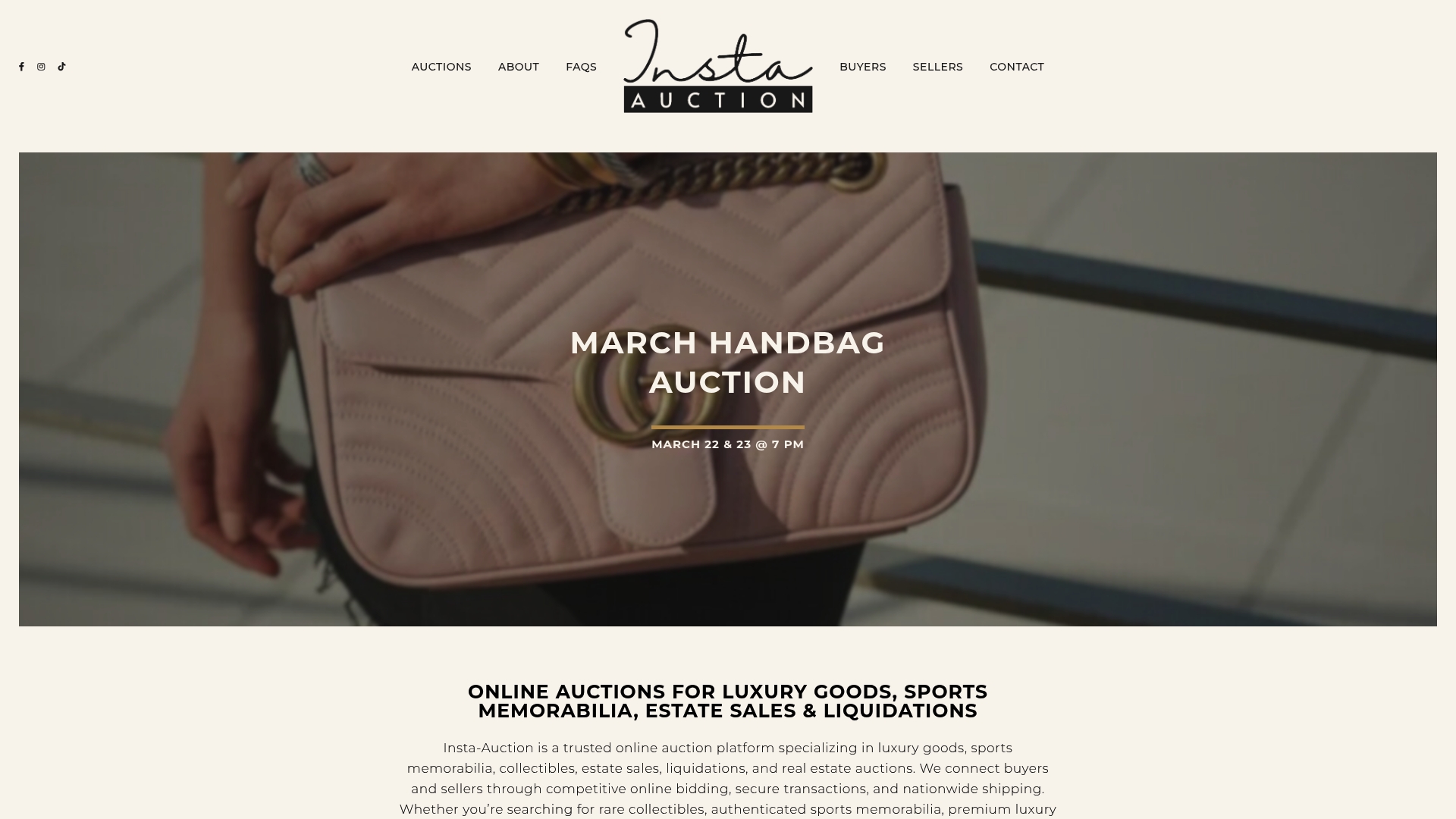
Insta-auction specializes in pre-loved luxury goods, collectibles, and estate items. The platform’s trained appraisers evaluate each piece and market it across multiple digital channels to attract serious bidders. Whether you are managing an estate sale or consigning a single high-value piece, the consignment auction guide walks you through every step. For sellers ready to list, the luxury goods auction page shows exactly how Insta-auction positions items for maximum competitive interest. A portion of every sale goes to charity, so your auction does more than just clear a room.
FAQ
What types of items sell best at auction?
Coins, jewelry, autographed memorabilia, and unique experiences consistently attract the strongest bidding. Items with scarcity or uncertain market value outperform common goods in almost every auction format.
Is furniture worth auctioning?
Furniture is the hardest estate sale category to sell at auction. Bulky items with high transport costs and style-specific appeal rarely generate competitive bids unless the piece is a verified antique or designer-signed original.
How many items should a live auction include?
A live auction lineup of 12–15 items maintains bidder energy and prevents attention fatigue. More items dilute excitement and reduce average closing prices.
When should I use a fixed price instead of an auction?
Fixed-price listings work best for common items with a stable, well-known resale value. Auctions outperform fixed pricing for rare, collectible, or hard-to-value items where competitive bidding surfaces the true market price.
What are the best affordable items for silent auctions?
Gift cards, themed gift baskets, and experience vouchers attract bidders across all budget levels. Silent auction formats accommodate a wider item mix than live events, making them ideal for pairing premium and budget-friendly lots.